How to Choose Bathroom Tile: Size, Finish & Grout
Tile is the part of a bathroom you’ll live with longest, and the part people most often regret. Not because they picked an ugly color, but because the floor is slippery, the white grout turned gray in a year, or the big tiles they loved don’t sit flat on a 70-year-old floor. Here’s how to avoid all three.
The short answer
Put porcelain on the floor and in the shower. Choose a matte finish for anything you walk on. Pick a mid-tone grout, not bright white. After that, the only real decision is how many grout lines you’re willing to clean: big tiles look calm but need a flat floor, and small tiles grip better and belong on shower floors.
Pick by area
| Area | Best choice | Size | Finish | Grout |
|---|---|---|---|---|
| Bathroom floor | Porcelain, wet DCOF 0.42+ | 12x24 or larger if the floor is flat; hex or 2” mosaic if not | Matte or honed | Mid-tone cement, sealed |
| Shower floor | Porcelain mosaic | 2” or smaller so it follows the slope | Matte or textured | Epoxy |
| Shower walls | Porcelain or glazed ceramic | Anything; subway and large-format both work | Gloss is fine on walls | Epoxy or sealed cement |
| Walls outside the shower | Glazed ceramic | Anything | Anything | Cement |
Porcelain or ceramic
Porcelain is a kind of ceramic, just a much denser one. The industry standard, ANSI A137.1, only lets a tile be called porcelain if it soaks up 0.5% of its weight in water or less. Regular ceramic is more porous, softer and easier to cut.
So the rule is simple. Porcelain goes where water and feet go: floors and showers. Glazed ceramic is a perfectly good way to save money on walls outside the shower.
Size: big tile vs small tile
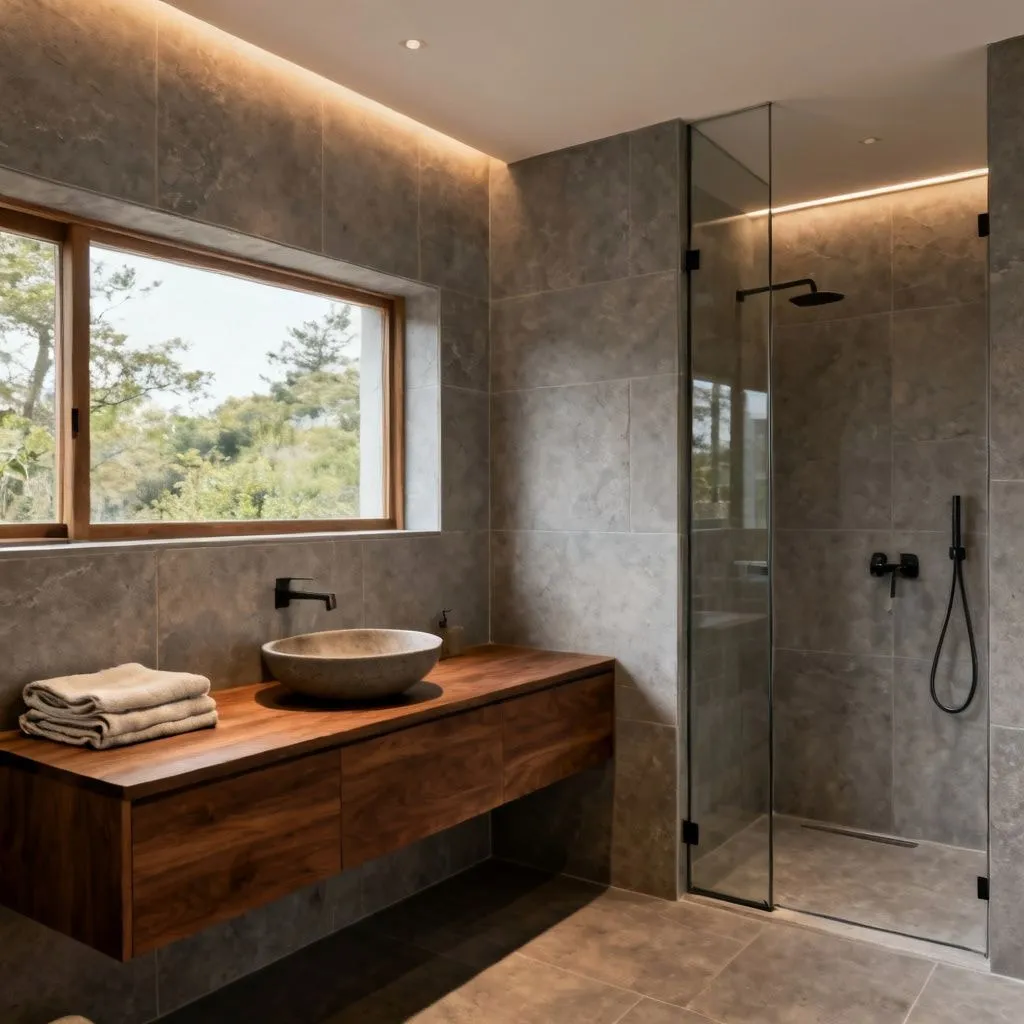
“Large-format” usually means any tile with a side 15 inches or longer. Big tiles mean fewer grout lines, a room that looks bigger, and less scrubbing. They also expose every flaw in the floor underneath. If the subfloor dips or humps, one tile edge ends up sitting higher than the next. Installers call that lippage, and you’ll feel it with bare feet. The Tile Council of North America’s flatness rules for large tile are strict enough that some floor prep is almost always needed.
That matters here. A lot of Champaign and Urbana houses built before 1970 have floors that have settled over the decades. Big tile can still work, but plan on paying to level the floor first.
Small mosaics, 2 inches and under, are the opposite trade. More grout, but every one of those lines adds grip, and small pieces can follow the slope of a shower floor down to the drain. That’s why nearly every well-built shower floor uses them.
One more term you’ll hear: rectified tile. Its edges are ground after firing, so the pieces are more uniform and can sit tighter together. Even then, the standards don’t allow joints thinner than 1/16 inch, so be skeptical of anyone promising “no grout lines.”
Finish
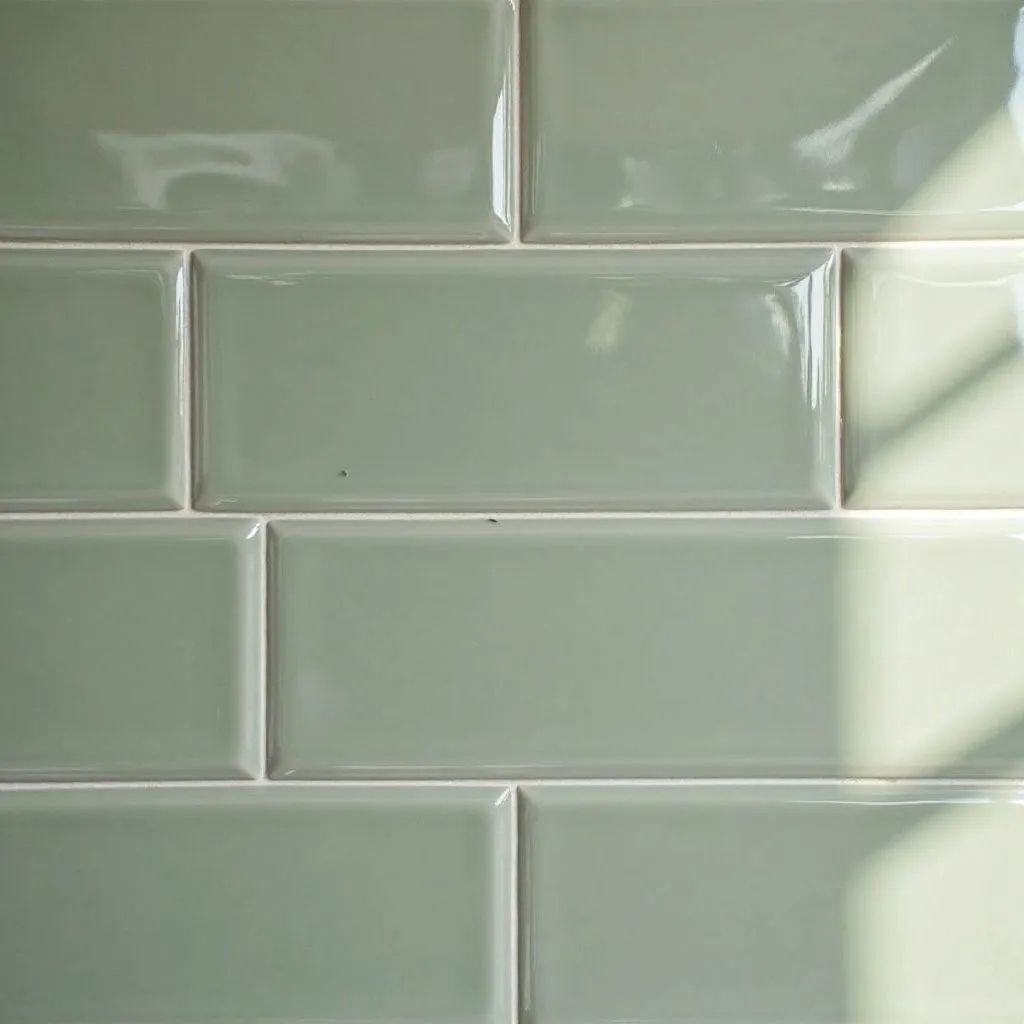
- Polished or glossy: bright and easy to wipe, but every water spot shows, and it can get slick underfoot. Keep it on the walls.
- Matte or honed: hides spots and grips better. This is what you want on a floor.
- Textured: the most grip of all. Good for shower floors.
Slip resistance
Ask about DCOF, short for dynamic coefficient of friction. ANSI A137.1 recommends a wet DCOF of 0.42 or higher for level indoor floors that get wet. It isn’t a legal requirement, but any decent floor tile lists it on the spec sheet. If a tile you love doesn’t hit 0.42, put it on the wall instead.
Grout
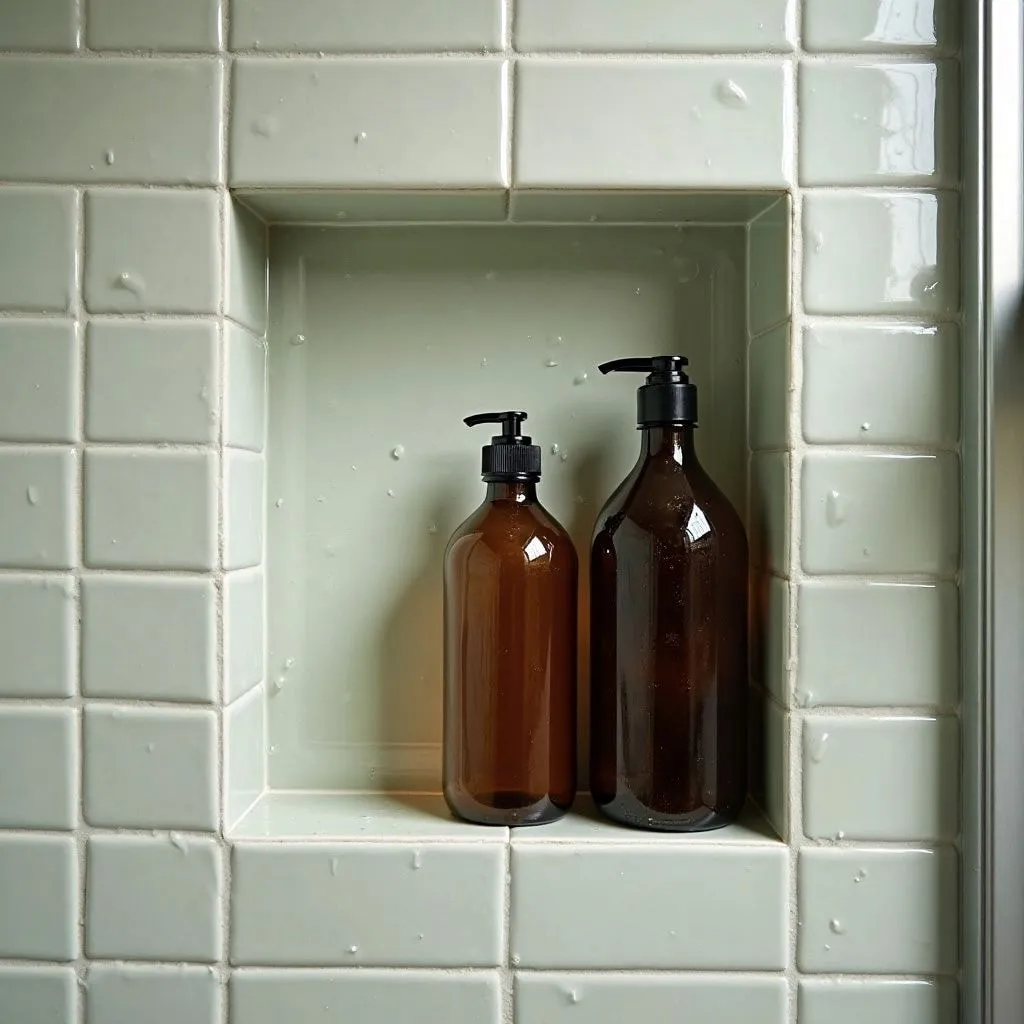
Standard cement grout is cheap and easy to work with. It’s also porous, so it needs sealing and will eventually stain. Epoxy grout is close to waterproof, never needs sealing and shrugs off mildew. It costs several times more and takes a skilled installer, but in a shower it pays for itself in cleaning time.
Our strong opinion: skip bright white grout on floors. It looks crisp for about three months. A mid-tone gray or warm greige hides dirt and hard-water marks and still looks clean years later.
The Champaign hard-water problem
Our water is hard. Illinois public health guidance calls water hard above 12 grains per gallon, and independent estimates put Champaign somewhere between 11 and 17. In a bathroom that means white spots on glossy tile, cloudy glass, and chalky rings on dark grout. Matte tile and mid-tone grout hide it best. A water softener helps every surface in the room.
Three real-world examples
A 1950s ranch with pink wall tile. That original tile was often set in a thick bed of mortar. It’s solid, but it’s a real job to tear out. If it’s in good shape and the retro look is growing on you, keep it and change the floor and paint. If it has to go, expect demolition to take longer than usual. A matte porcelain hex floor with white subway walls suits the house without fighting it.
A 1920s bungalow near campus.
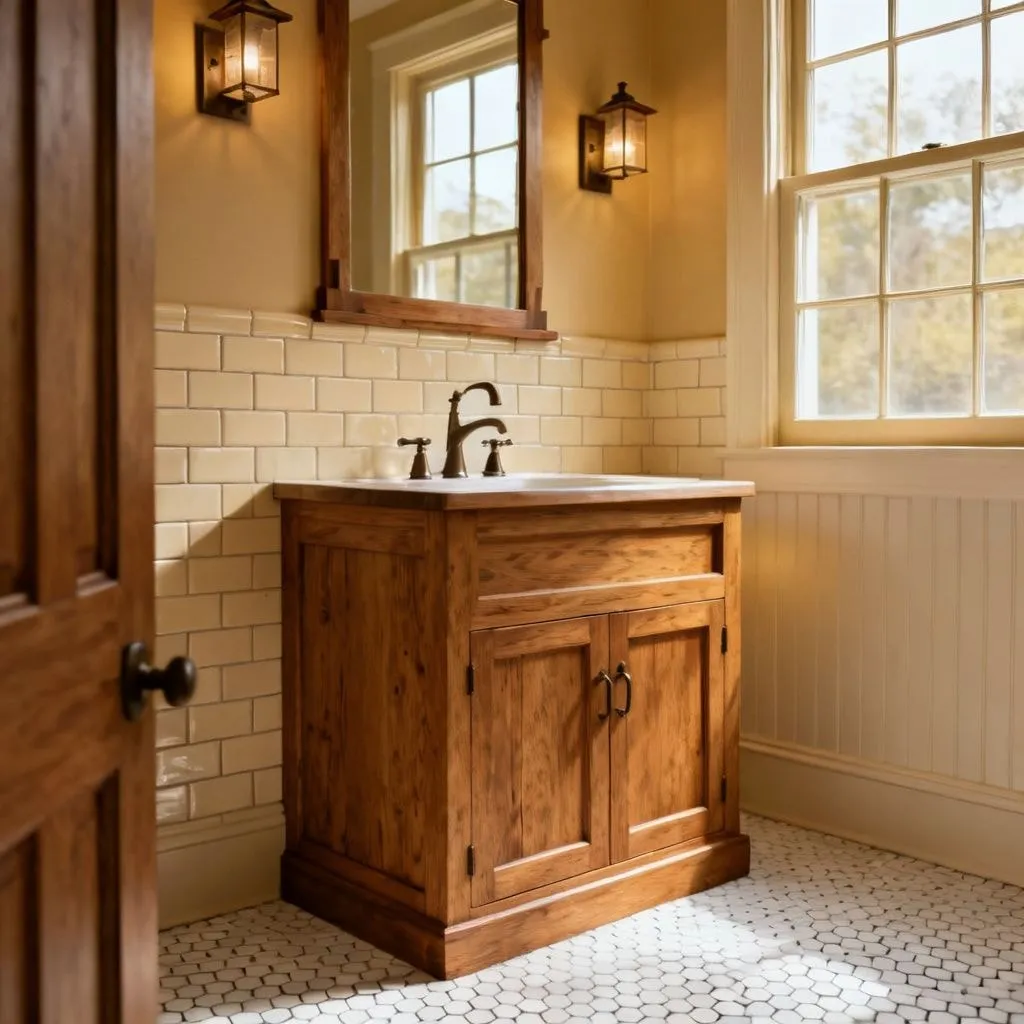
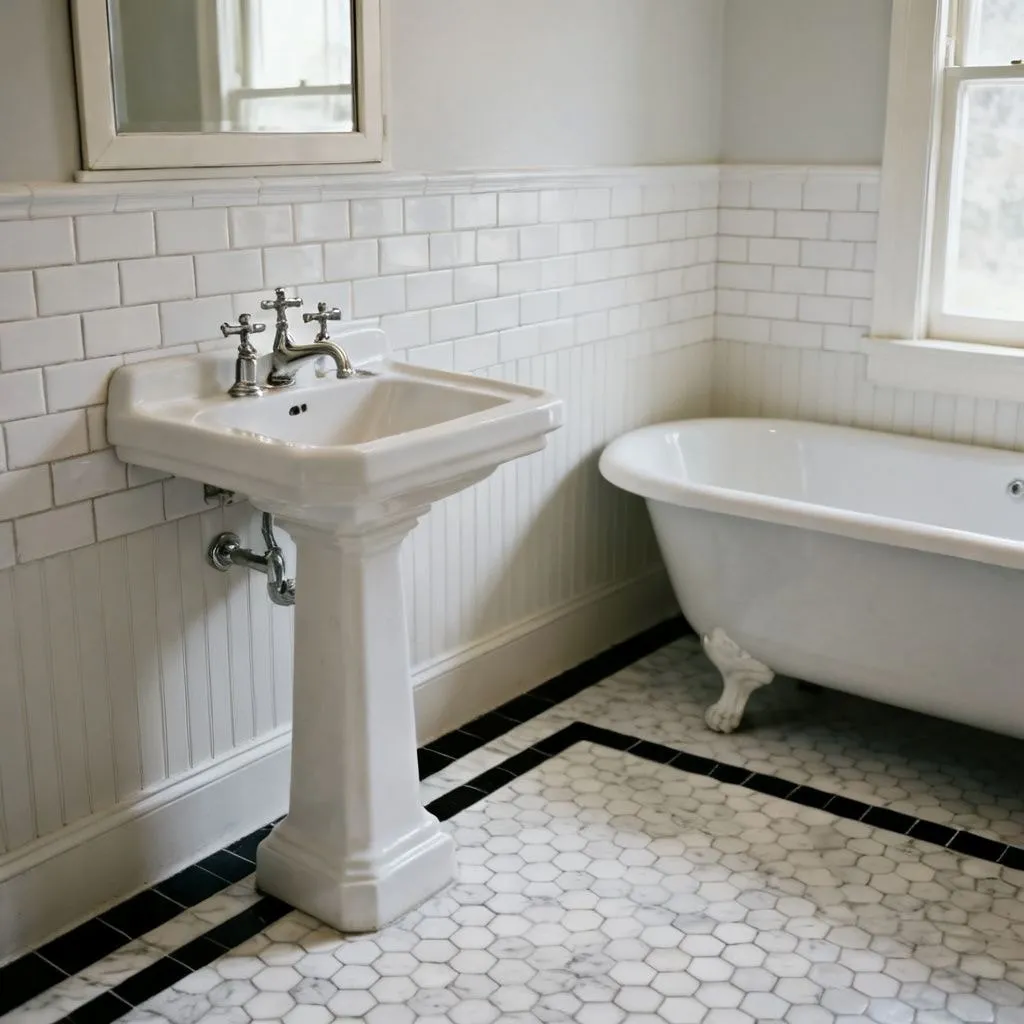
The floor won’t be flat. Instead of paying to level it for 24-inch tile, go with a small white hex mosaic and a simple border. It’s true to the house, and small tile forgives an imperfect floor. Our Craftsman style guide has more on this look.
A newer home in Savoy or southwest Champaign. Modern subfloors are usually flat, which makes these homes the best candidates for large-format porcelain on floors and walls. You get the calm, spa-like look and very little grout to clean. See Warm Minimal Spa.
What it costs
National installed-cost estimates for 2026 run about $6–$13 per square foot for basic ceramic, $8–$18 for porcelain and $13–$28 for mosaic. Tearing out old tile adds roughly $2–$5 per square foot. Labor in Champaign generally runs below big coastal cities. For whole-project numbers, see the budget guide.
Where to splurge, where to save
Spend on what you touch and see up close: the shower floor, which takes the most water and wear, and one feature surface like the shower back wall or the wall behind the vanity. That’s where handmade tile, zellige or natural stone earns its price.
Save on everything else. Plain white or neutral porcelain on the remaining shower walls costs a fraction of designer tile and looks timeless. Glazed ceramic is fine on dry walls. And don’t pay for marble on a floor unless you’re ready to seal it and avoid acidic cleaners; marble-look porcelain gets you 90% of the look with none of the upkeep.
Spend on installation too. A great installer can make budget tile look custom. A rushed one can make expensive tile look cheap.
Before you buy
- Porcelain for floors and showers: water absorption 0.5% or less on the spec sheet
- Wet DCOF of 0.42 or higher on any floor tile
- Matte or textured finish on anything you walk on
- Ask your installer to check the floor’s flatness before you order large tile
- Grout color chosen to hide dirt, and epoxy in the shower
- Order 10–15% extra from the same batch, for cuts now and repairs later
Common questions
What is the best tile for a bathroom floor? Matte porcelain with a wet DCOF of 0.42 or higher. It’s dense, barely absorbs water and has enough grip when wet.
Is large tile or small tile better for a small bathroom? Large tile makes a small room look bigger because there are fewer grout lines, but only if the floor is flat. On an older, uneven floor, a small hex or mosaic is the safer choice.
What tile is easiest to keep clean? Large-format matte porcelain with narrow joints and a mid-tone grout. In the shower, use epoxy grout so it never needs sealing.
Should shower floor tile be different from the bathroom floor? Usually, yes. Shower floors need small tiles (2 inches or less) so they can slope to the drain, and a textured or matte finish for grip.
Planning a new shower too? See our walk-in shower cost guide, or browse the 2027 bathroom trends for tile ideas.
Sources
- ANSI: Porcelain vs ceramic tile (A137.1)
- Construction Specifier: Tile and stone lippage
- Fine Homebuilding: Large-format tiles
- Fine Homebuilding: Epoxy vs cement grout
- Houzz: Epoxy vs cement grout
- Illinois Department of Public Health: Common substances in drinking water
- This Old House: Tile floor cost
- HomeAdvisor: Ceramic or porcelain tile installation cost