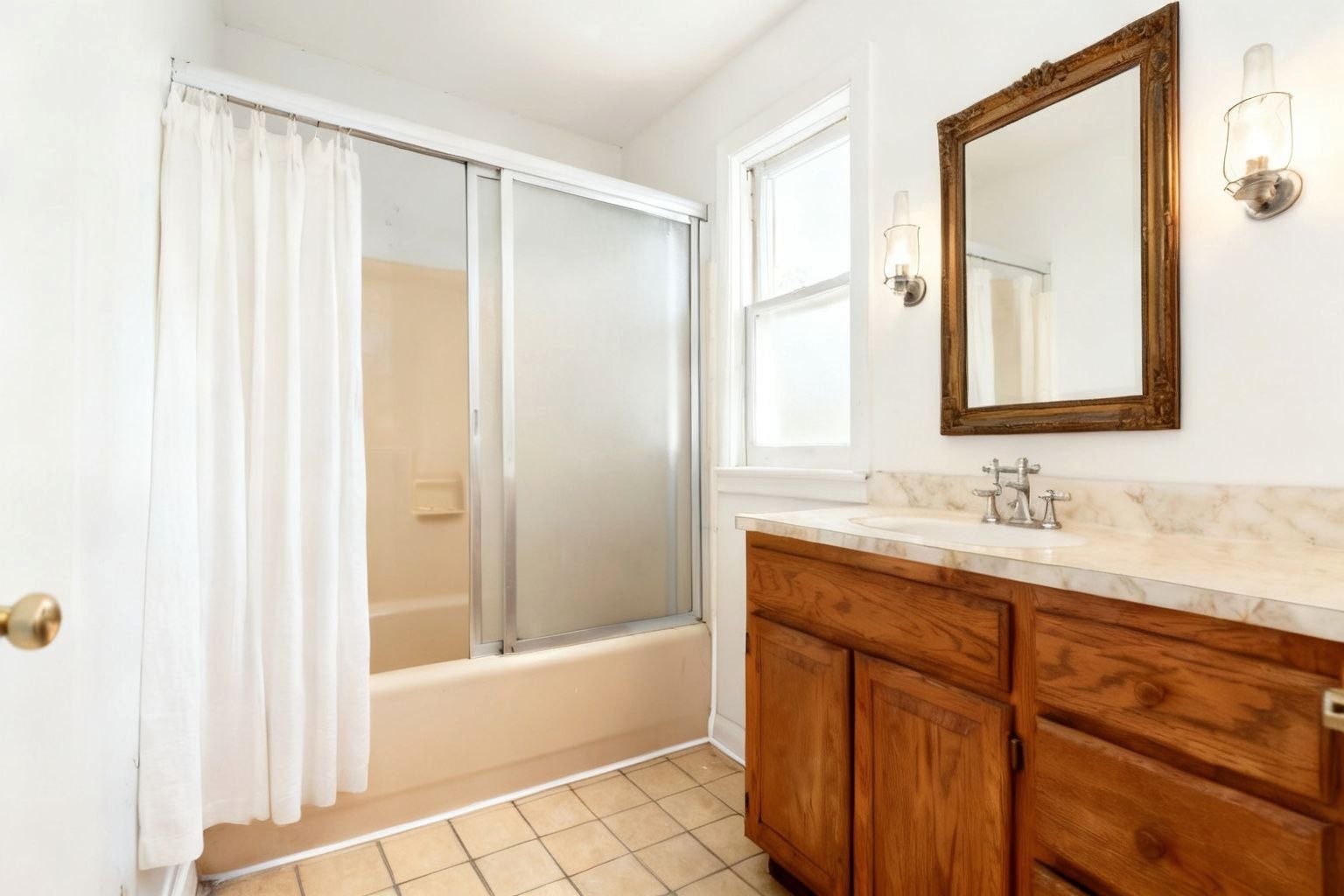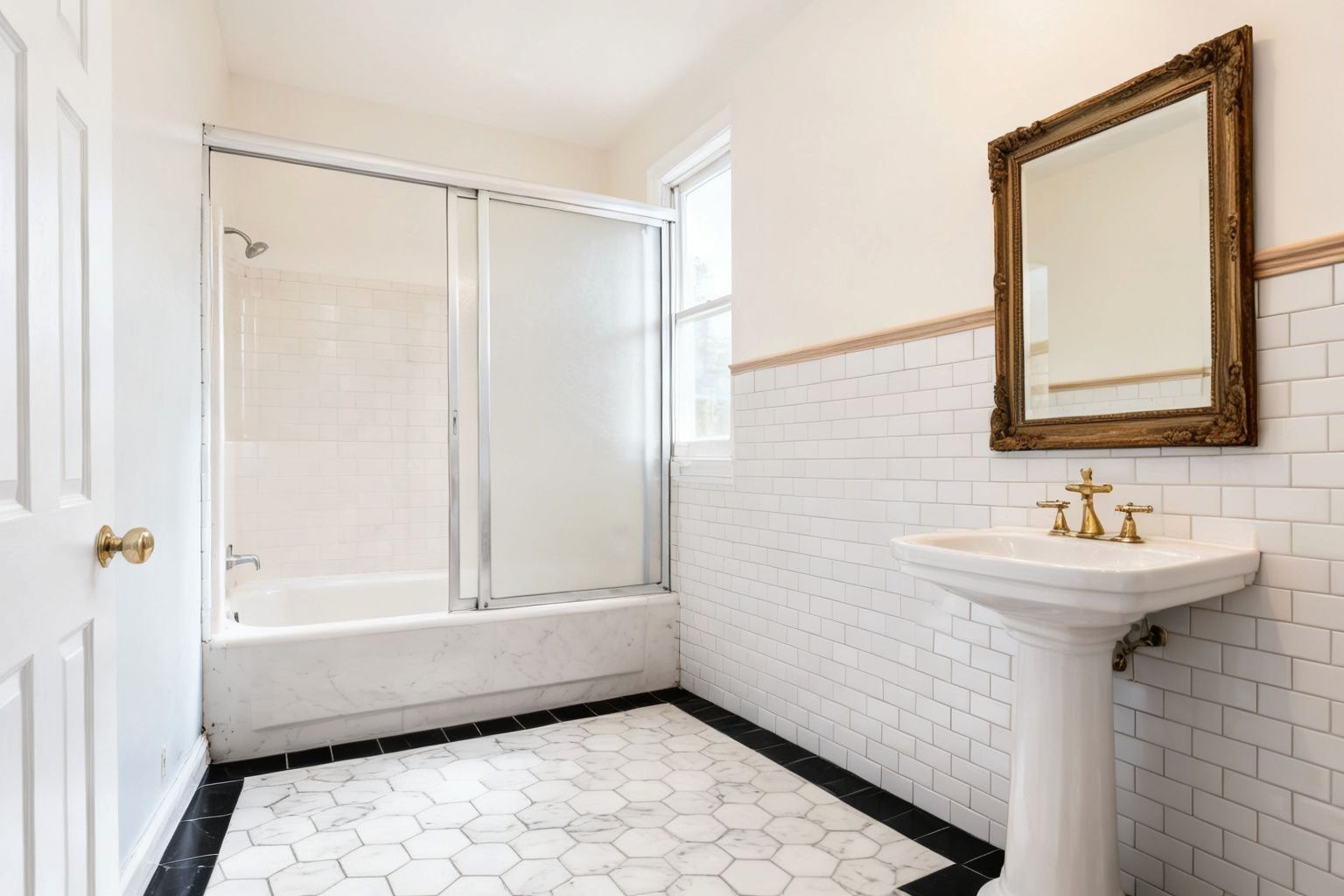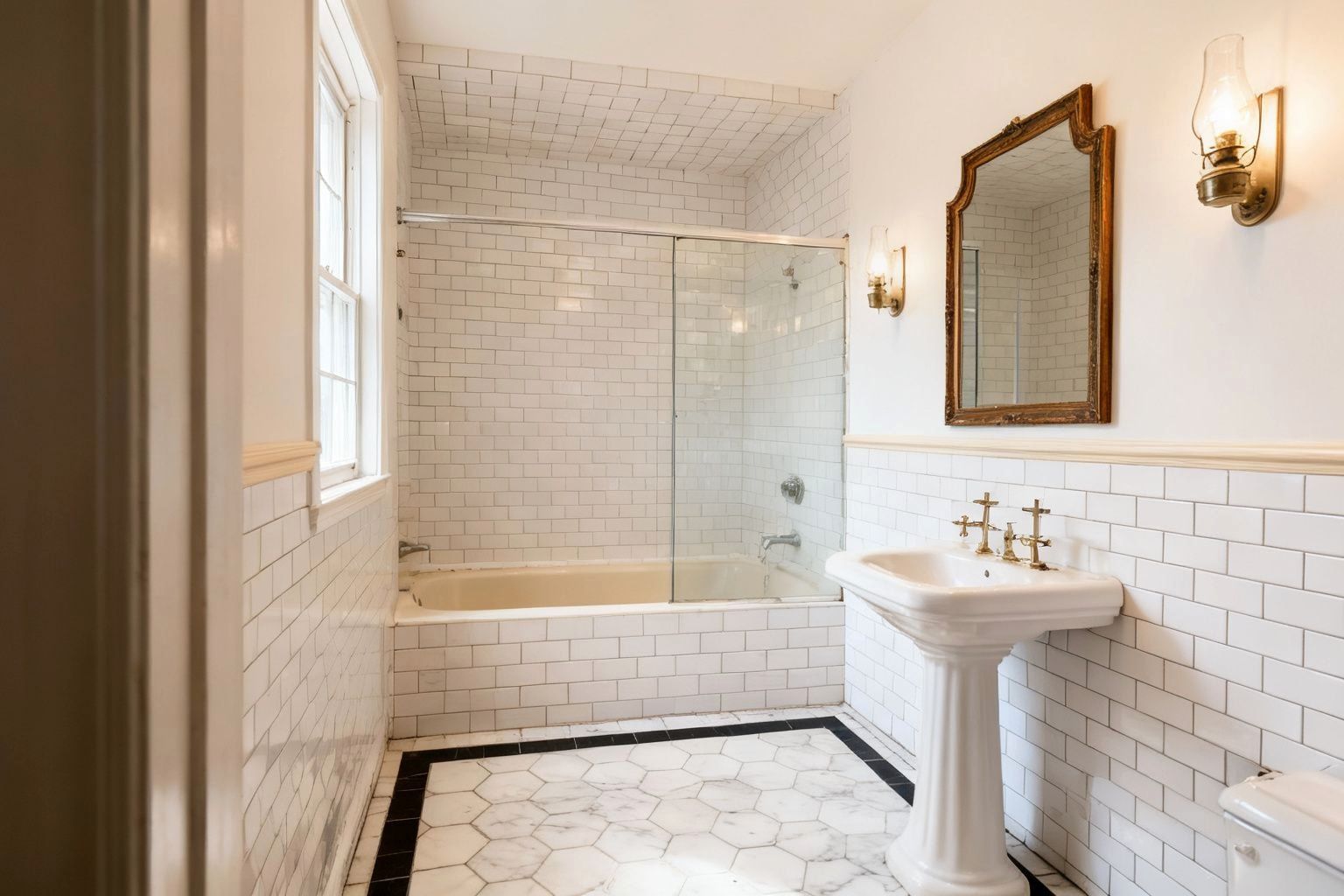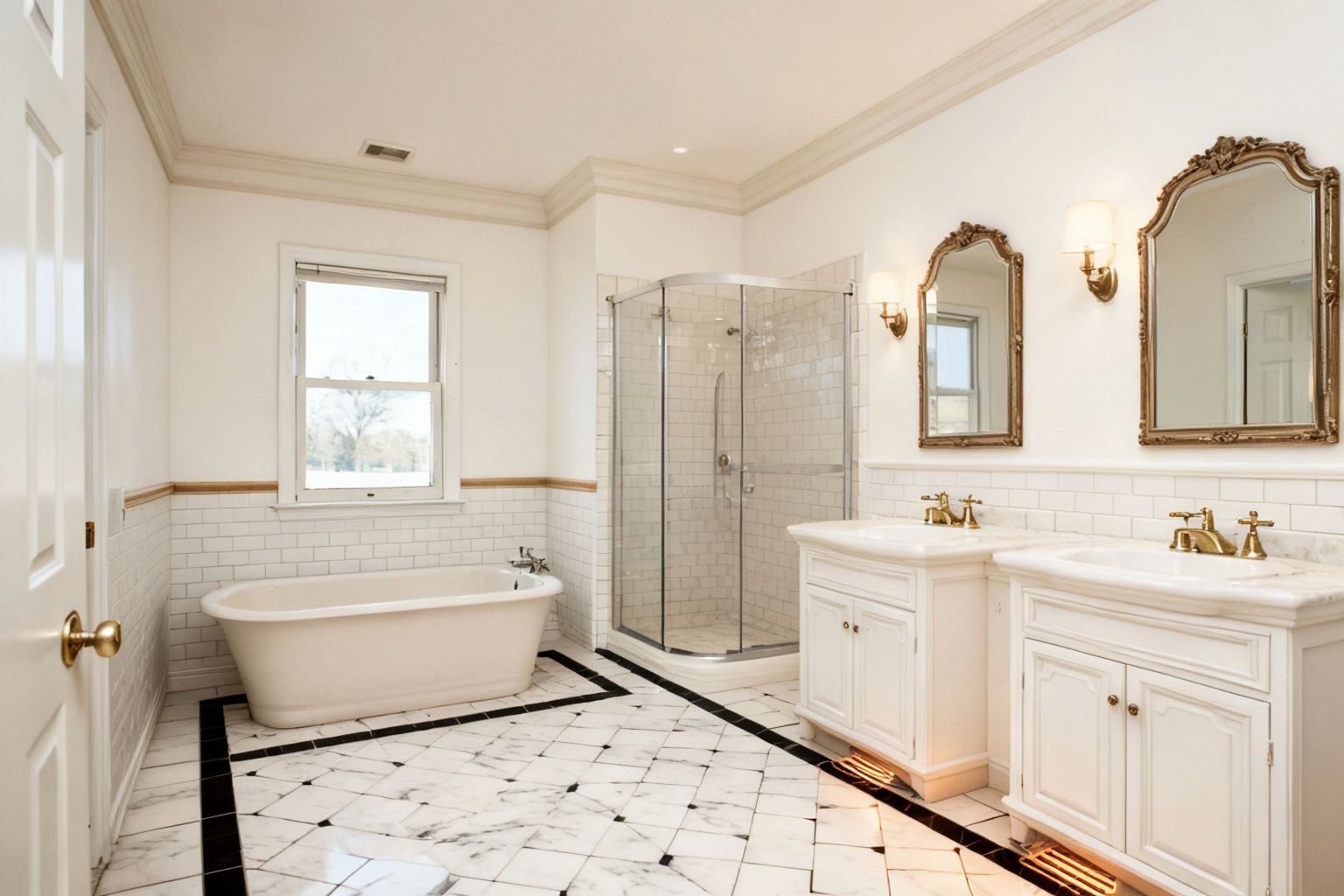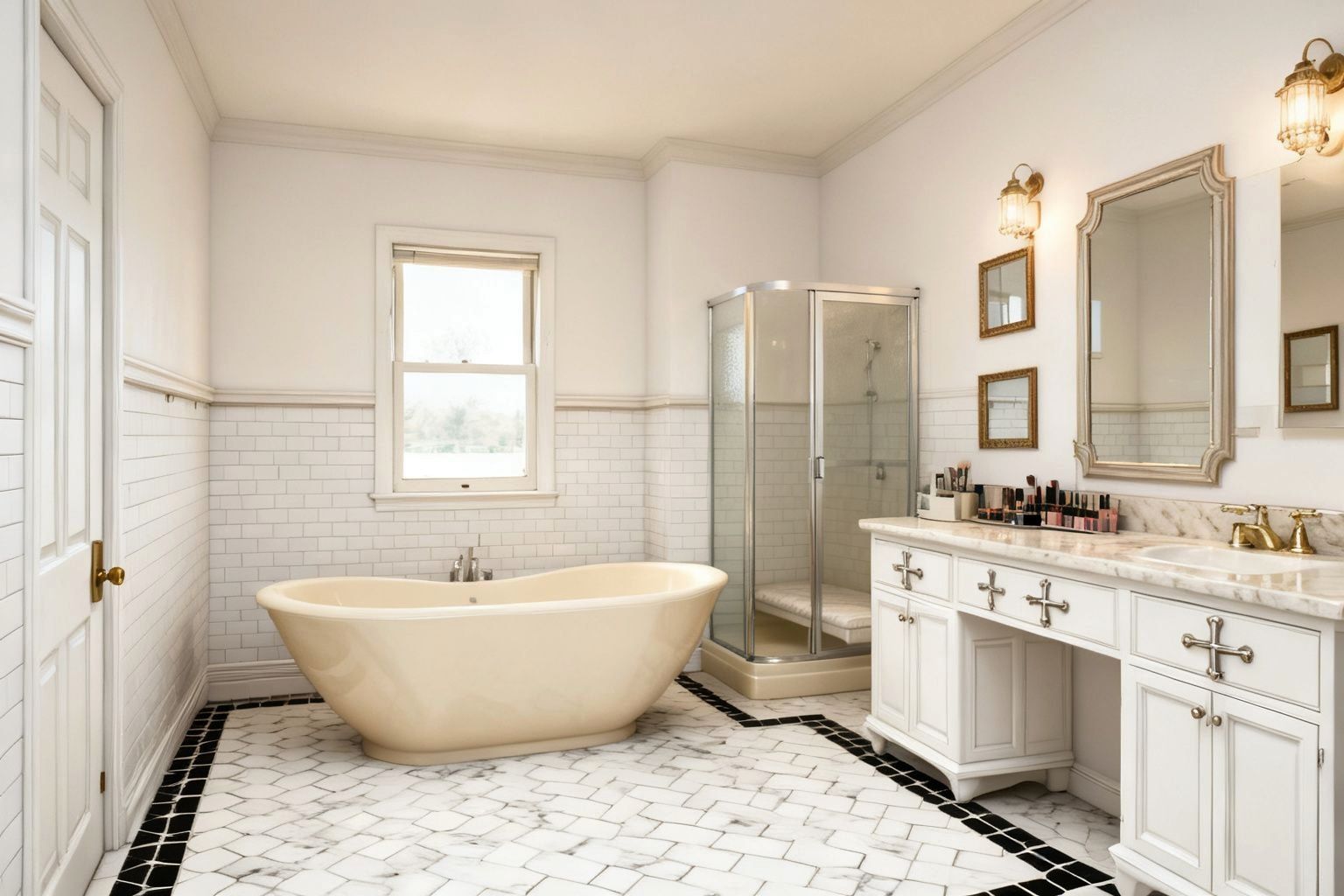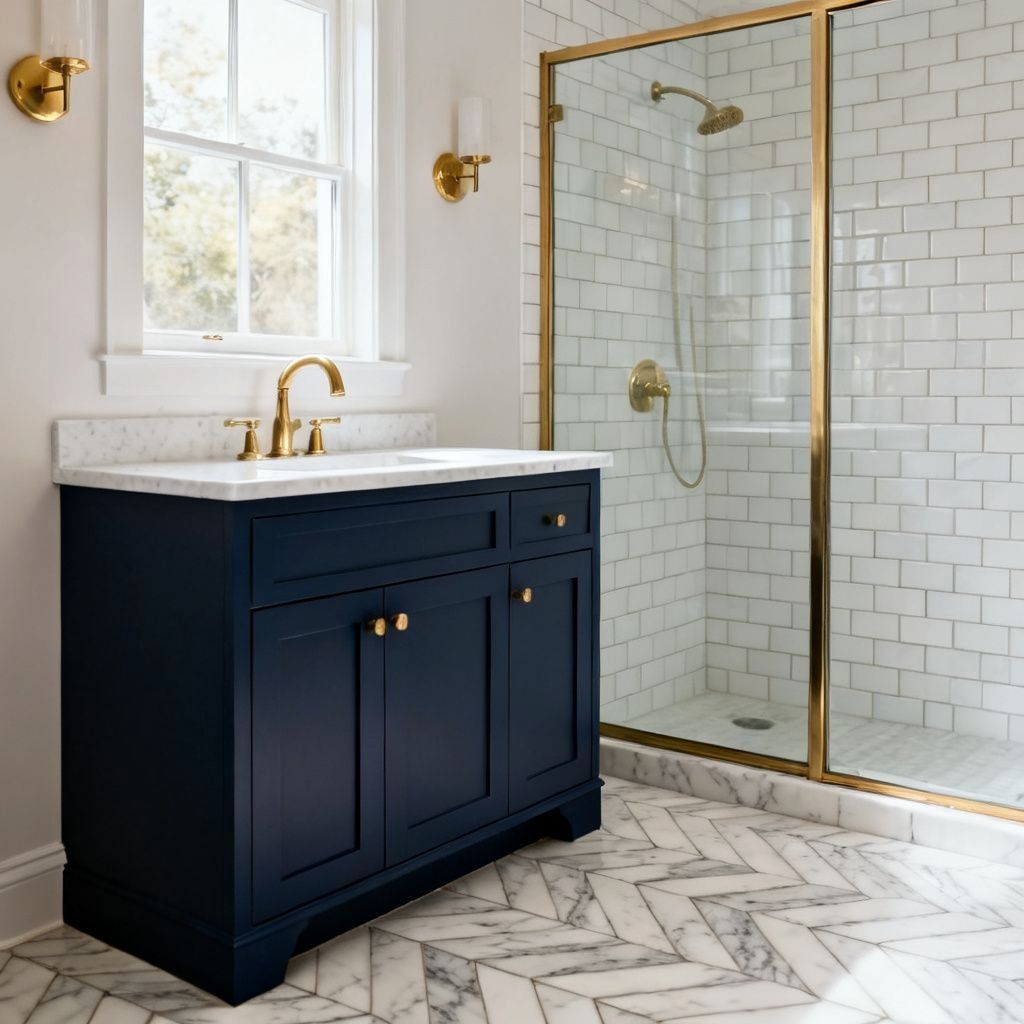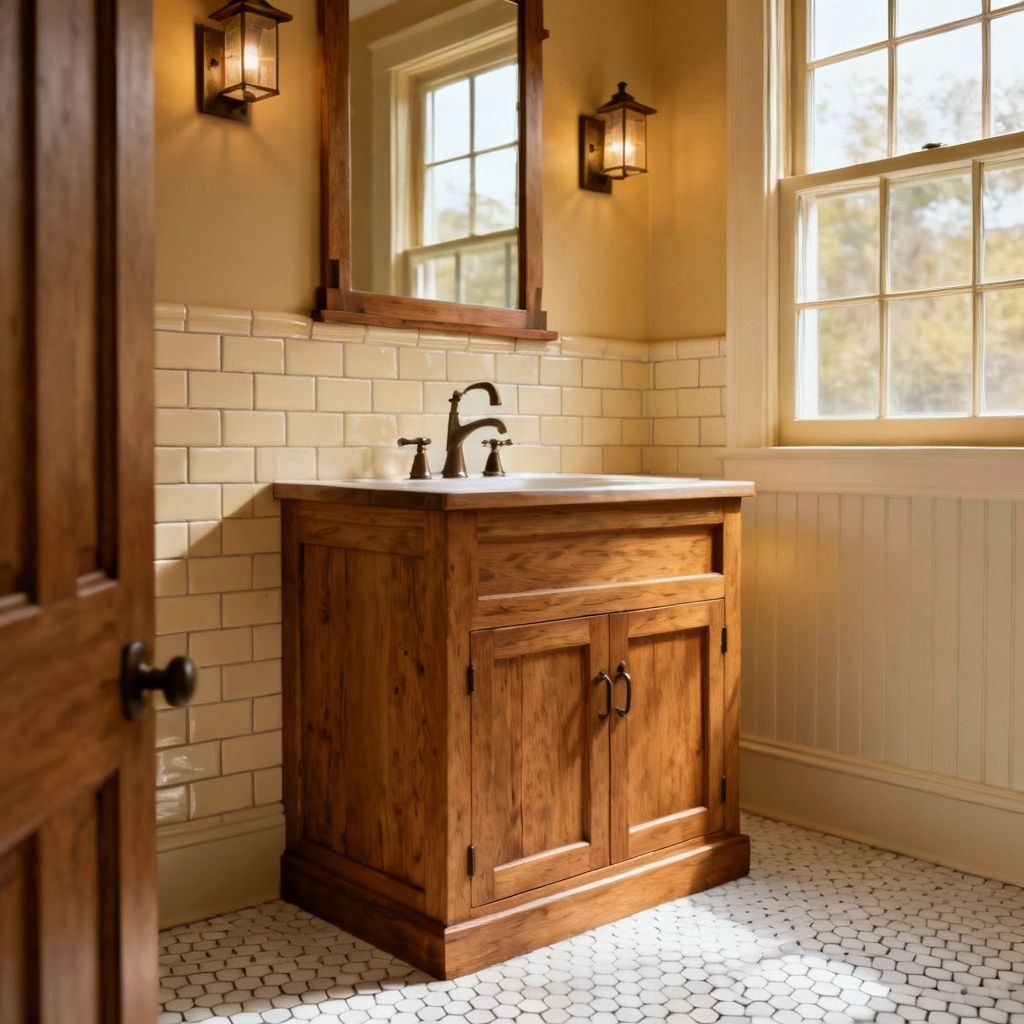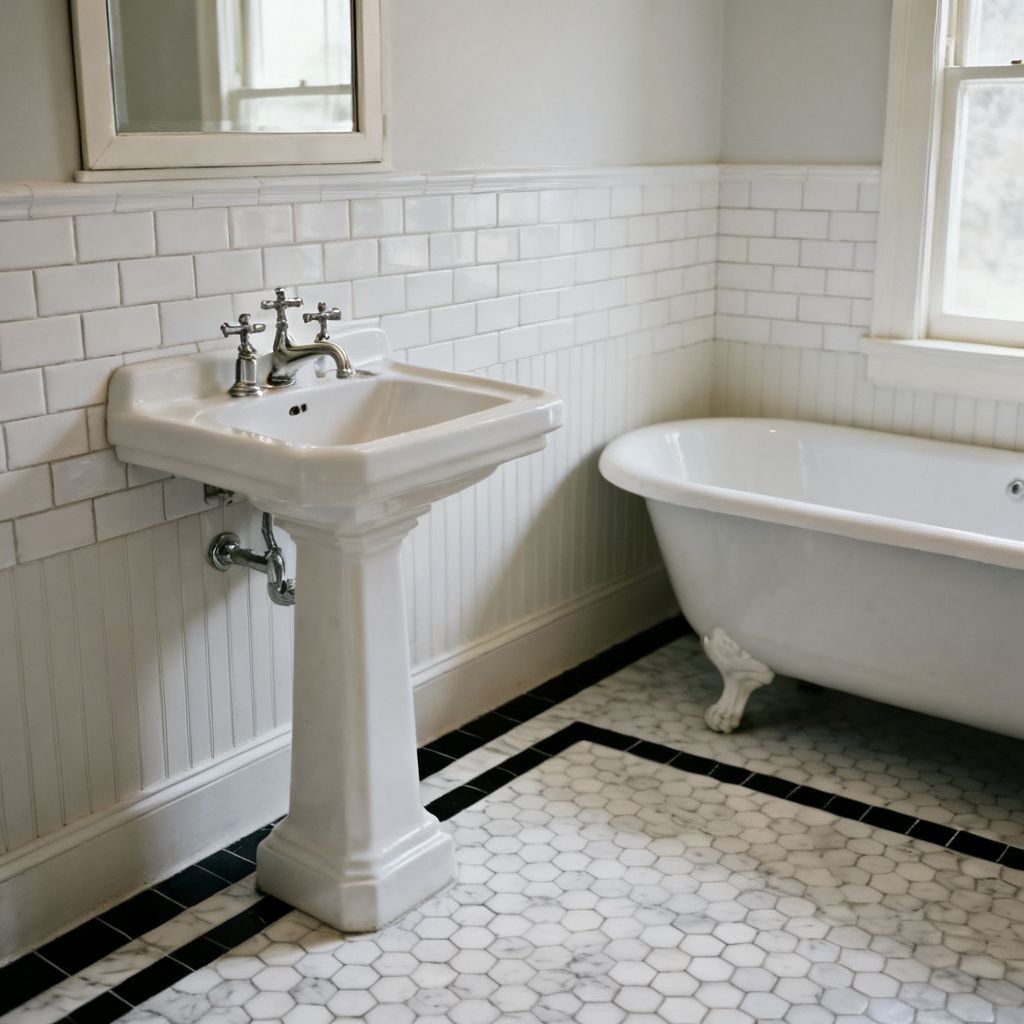
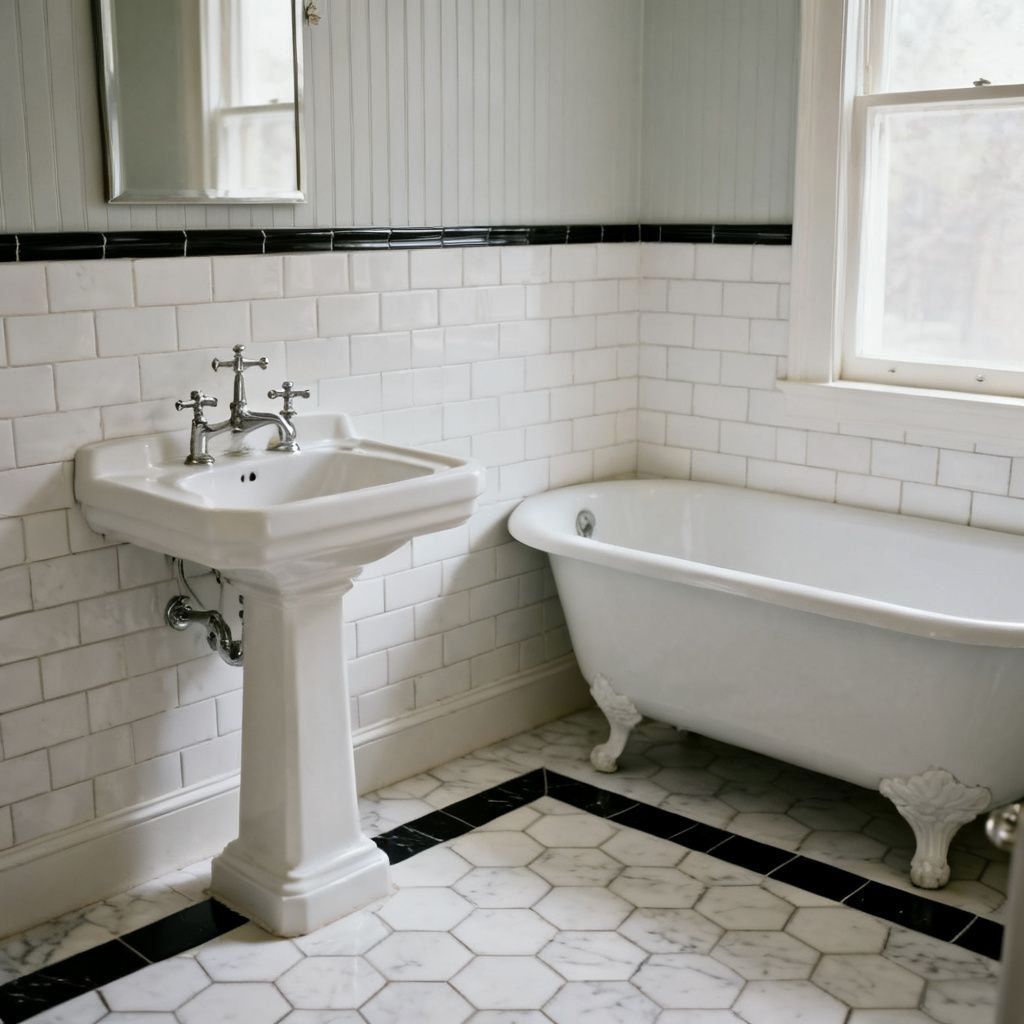
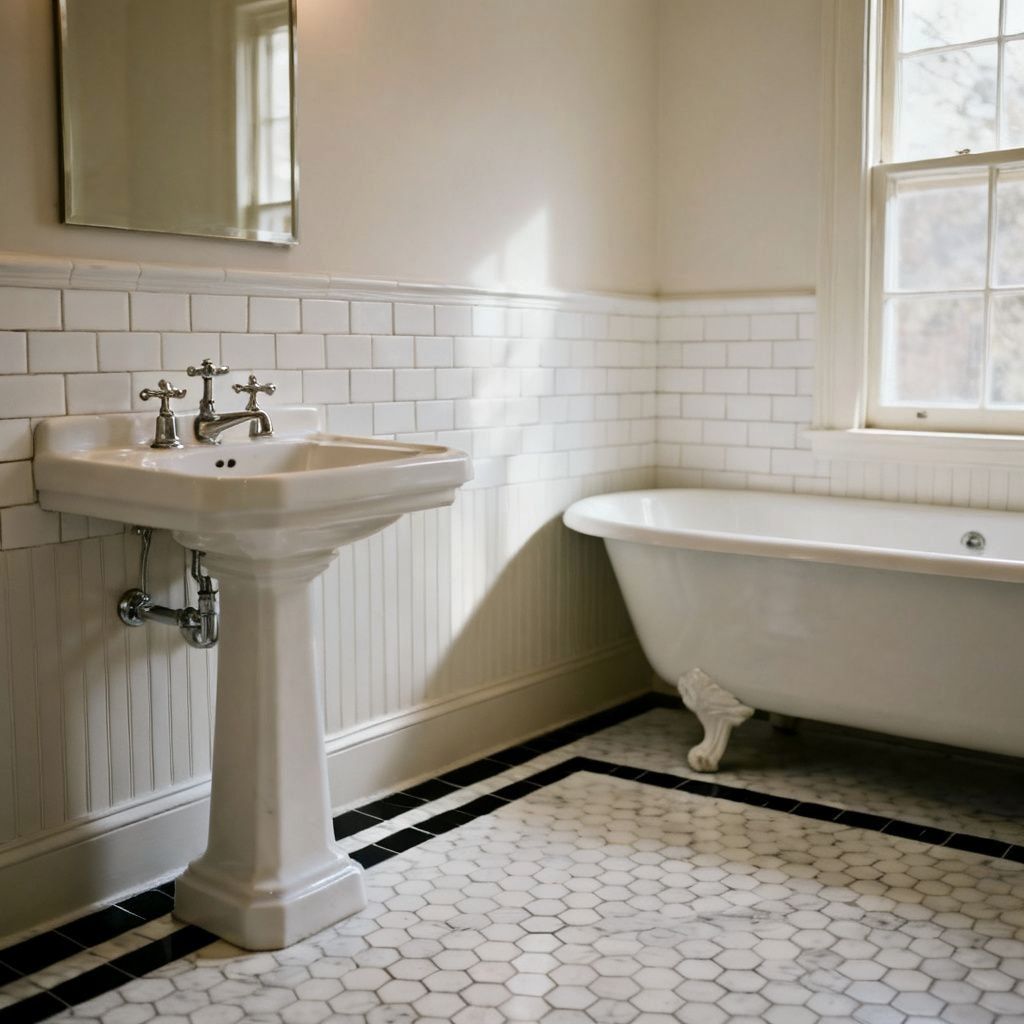
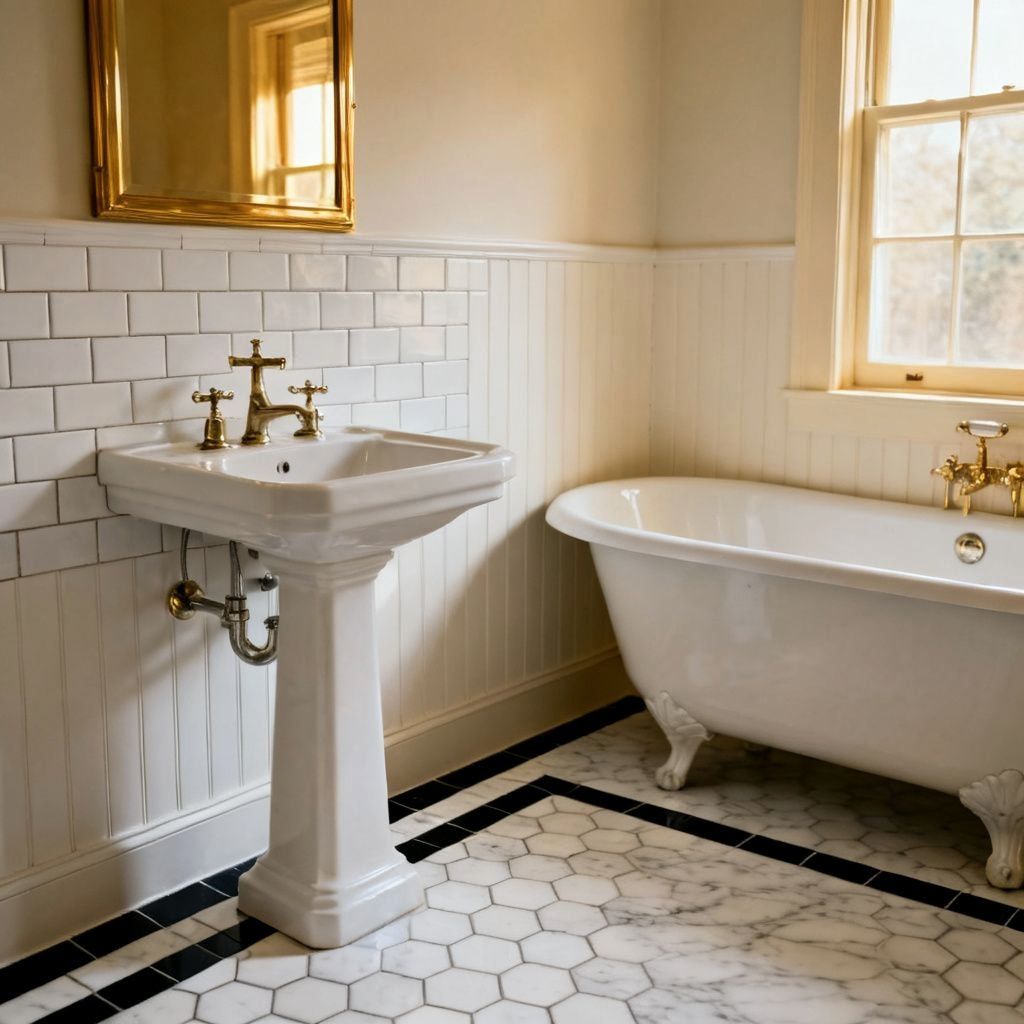
The classic bathroom borrows from the early 1900s: white subway tile, a hexagon mosaic floor and fixtures that look like they could have come with the house. It is the right call for many of the older homes in Champaign and Urbana, and it ages better than almost any trend.
What defines the style
- Tile wainscot. White subway tile around the lower walls, finished with a cap or chair-rail piece, with painted plaster or beadboard above.
- Hex mosaic floors. Small white hexagons, often with a black border a few inches from the wall. Marble is traditional; porcelain is cheaper and stain-proof.
- White porcelain pedestal or console sinks. Glossy vitreous china is the period-correct choice and the easiest to keep clean. Pedestals open up a small room but give up storage, so plan for a medicine cabinet or a nearby linen closet.
- Cross-handle faucets in polished nickel or chrome.
What it costs
The materials are not exotic, but the labor is. Mosaic floors and wainscot take more hours to set than large-format tile, which pushes classic bathrooms toward the upper-middle of the range. Real cast-iron clawfoot tubs are heavy, and older floors sometimes need reinforcement under them. Ask your contractor to check the joists before you fall in love with one.
Where it fits in Champaign-Urbana
Classic is the natural choice for pre-war houses, including bungalows and foursquares near downtown Champaign, West Urbana and the campus area. Restoring the bathroom in period style can also help resale in these neighborhoods, where buyers often expect original character.
Things to watch
- Older homes often hide galvanized supply lines and cast-iron drains. A classic remodel is the right moment to replace them.
- Pedestal sinks expose the drain and supply lines, so budget for nicer polished trim instead of standard chrome.
- Marble floors etch from acidic cleaners. Use a pH-neutral cleaner or choose porcelain.