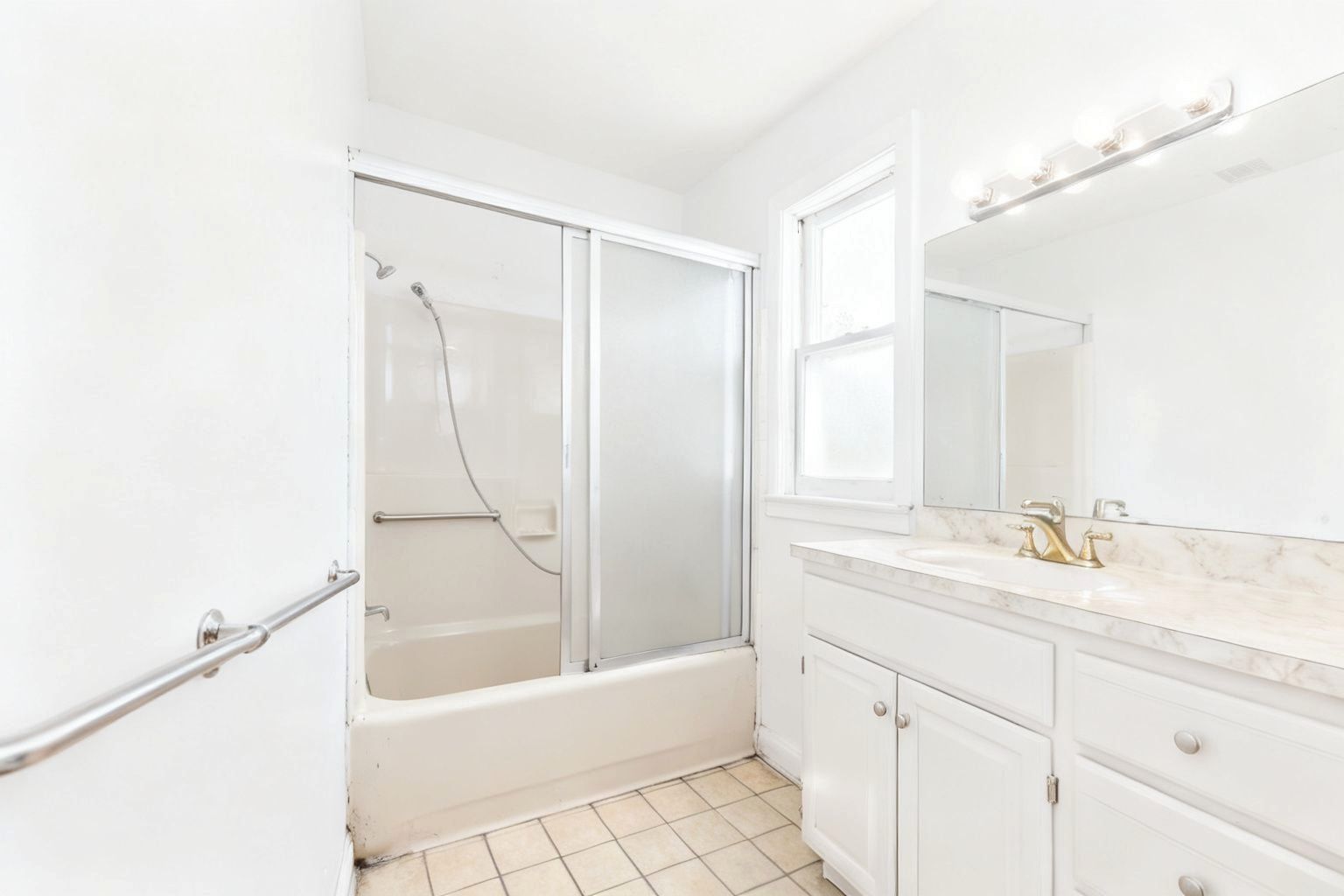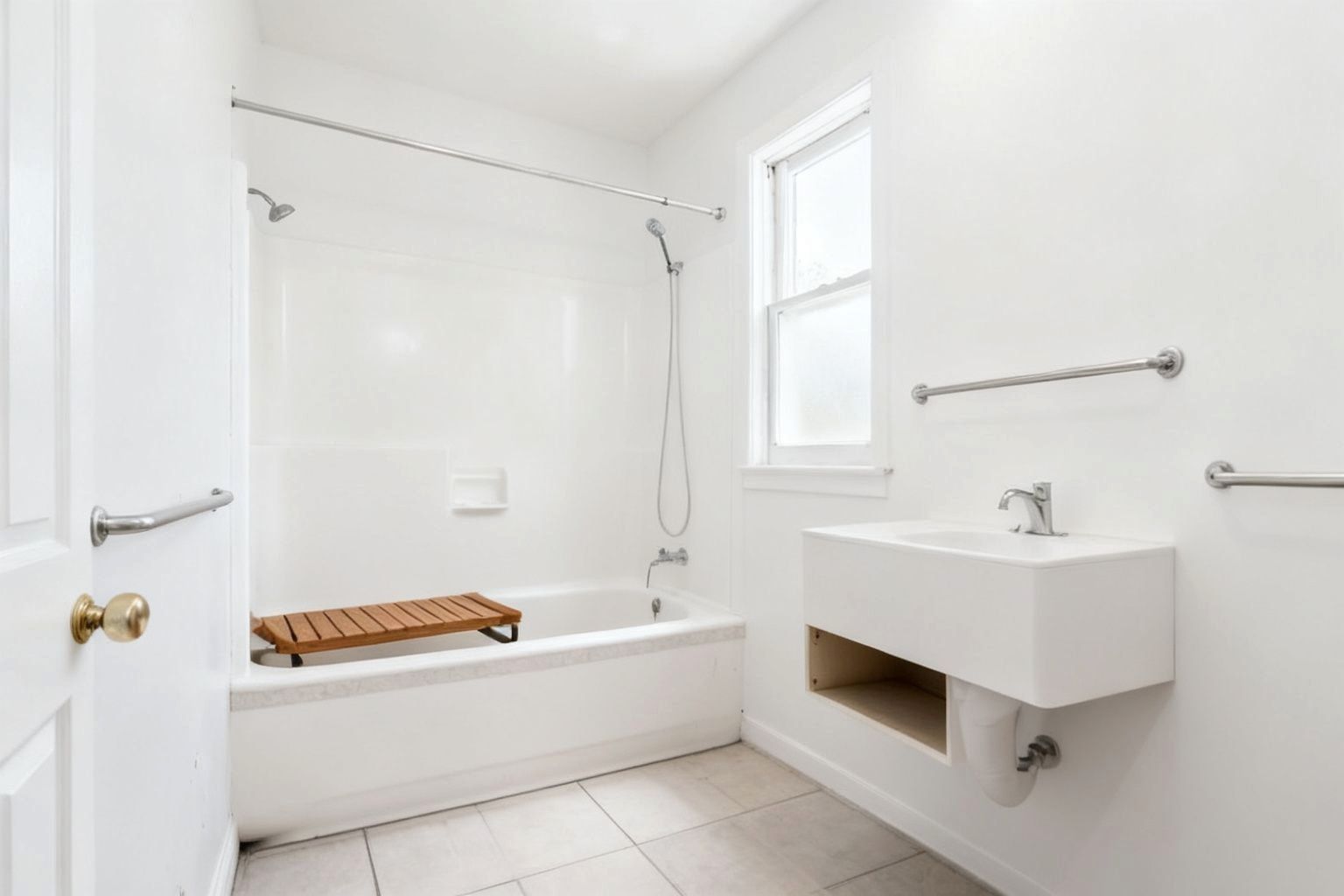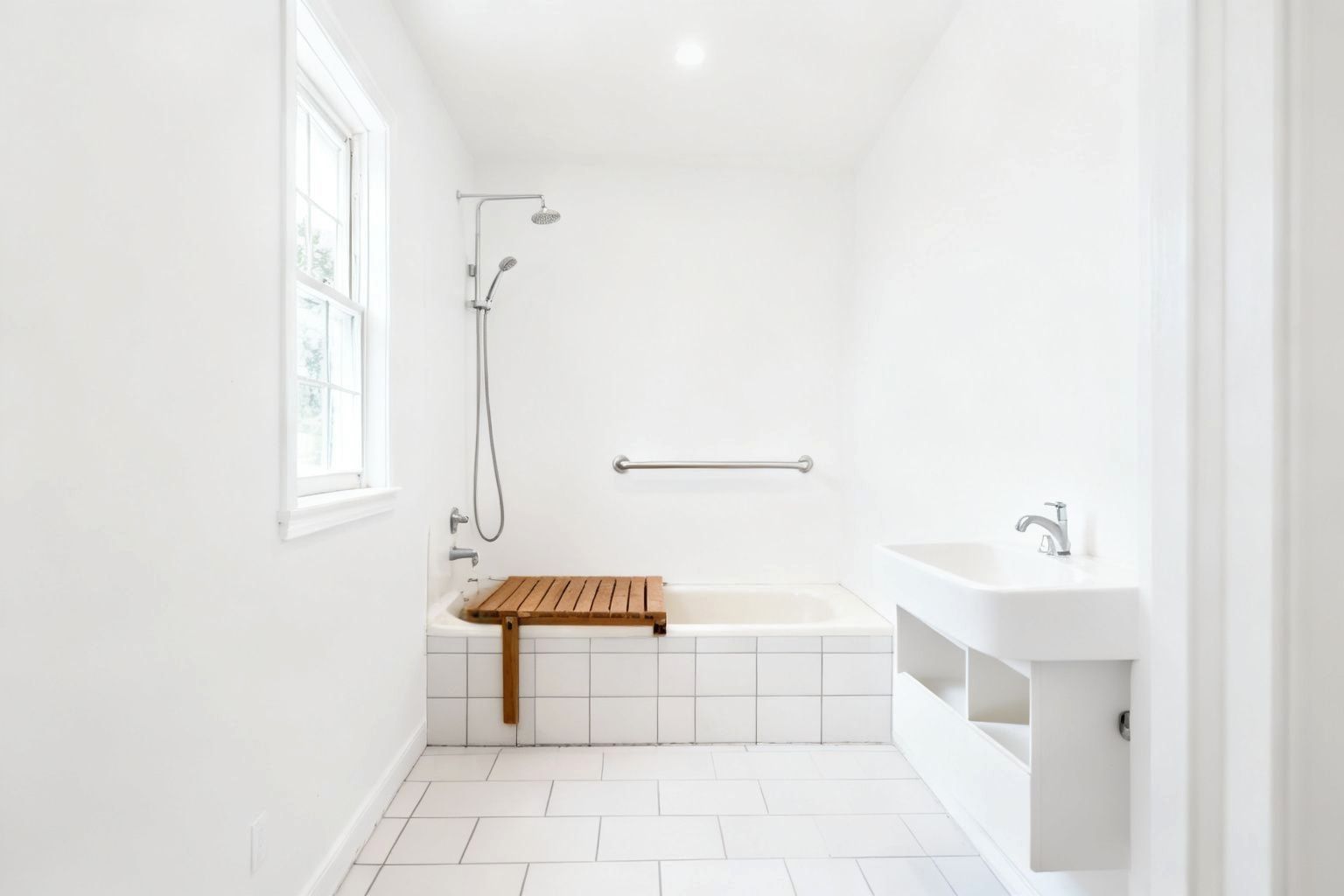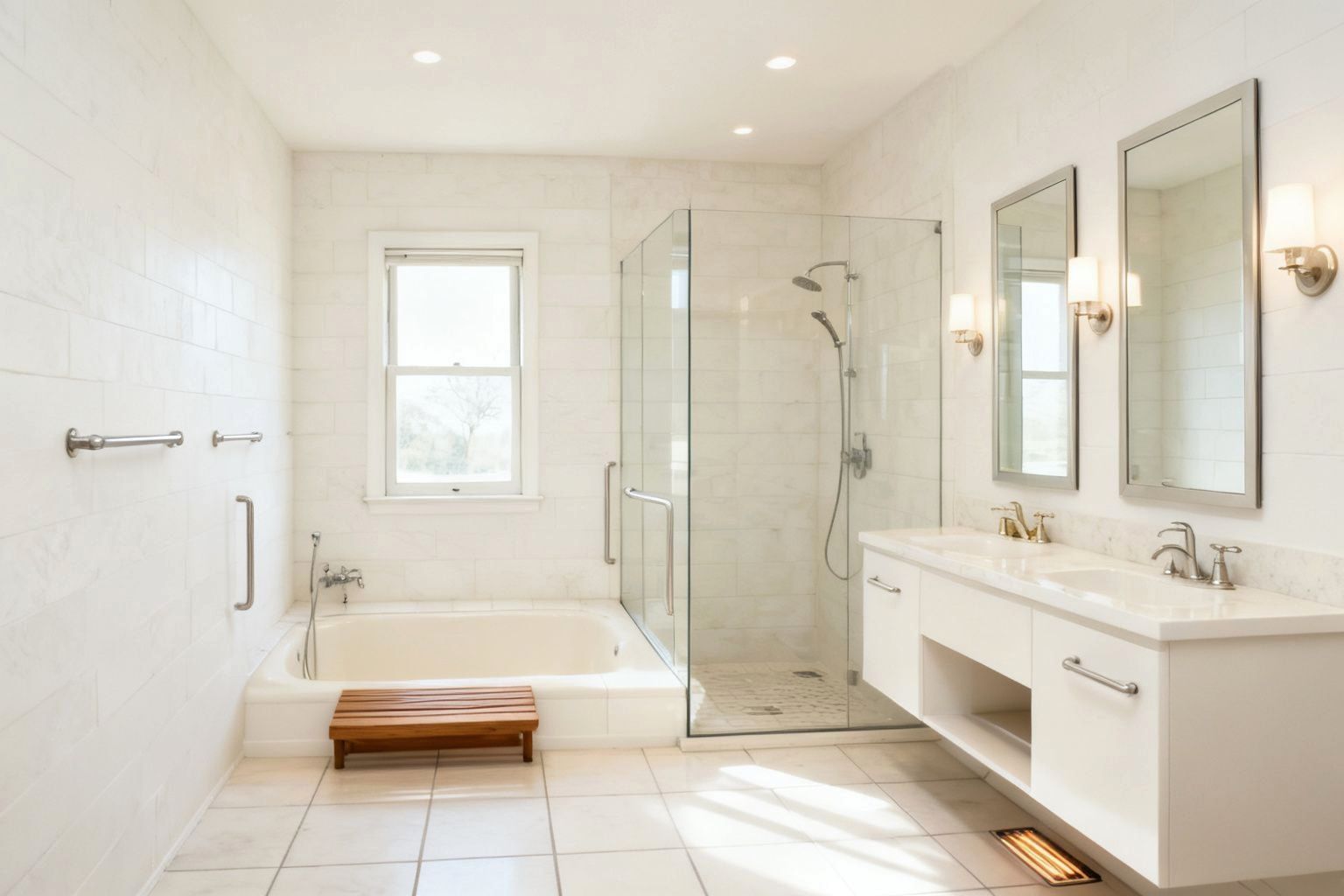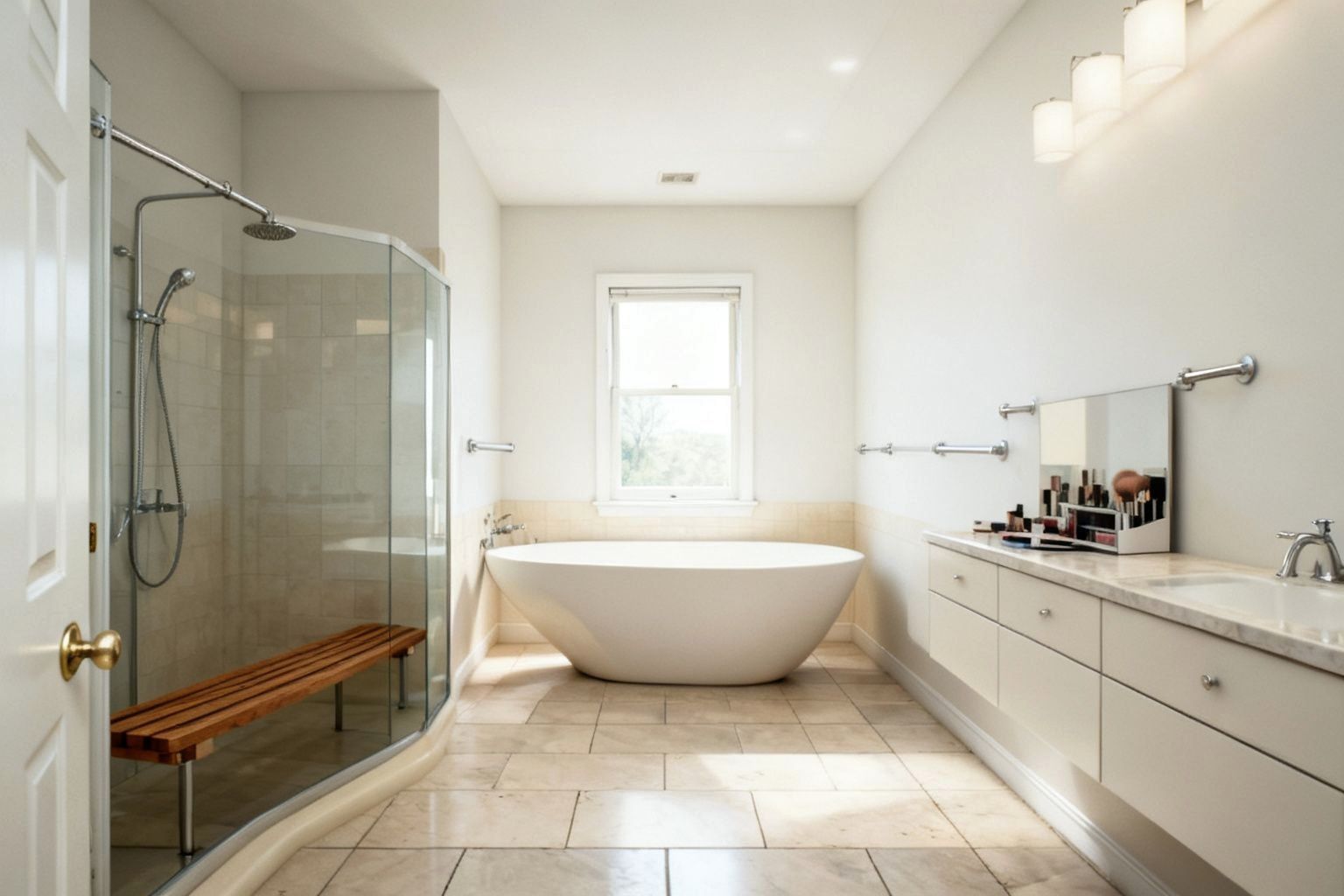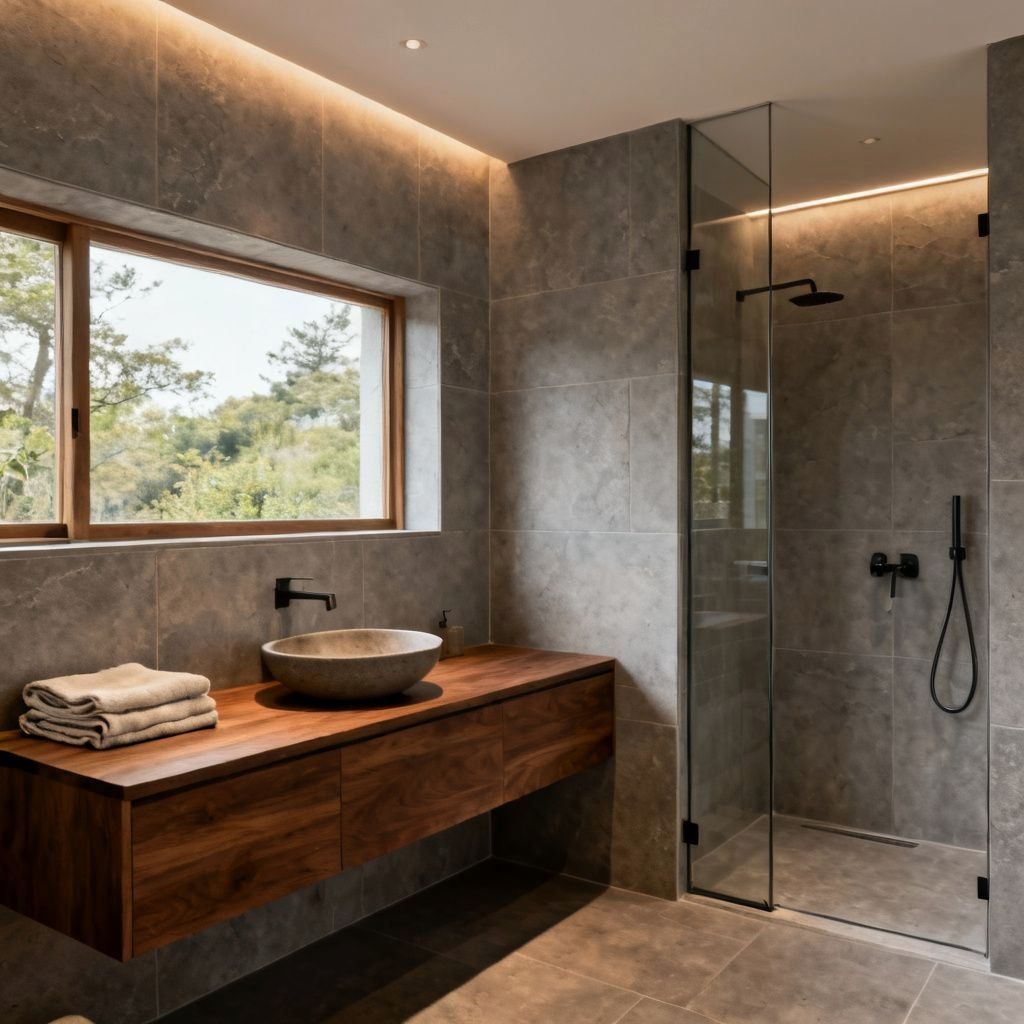
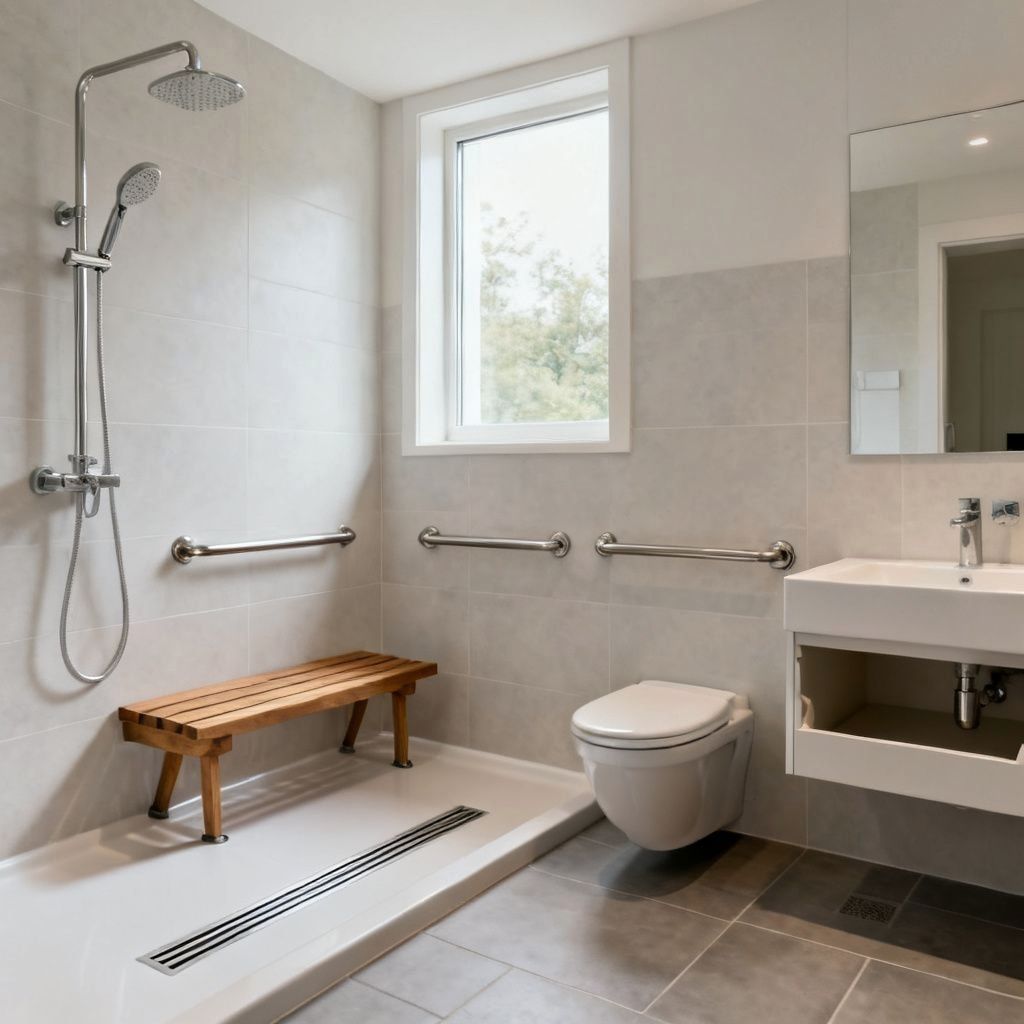
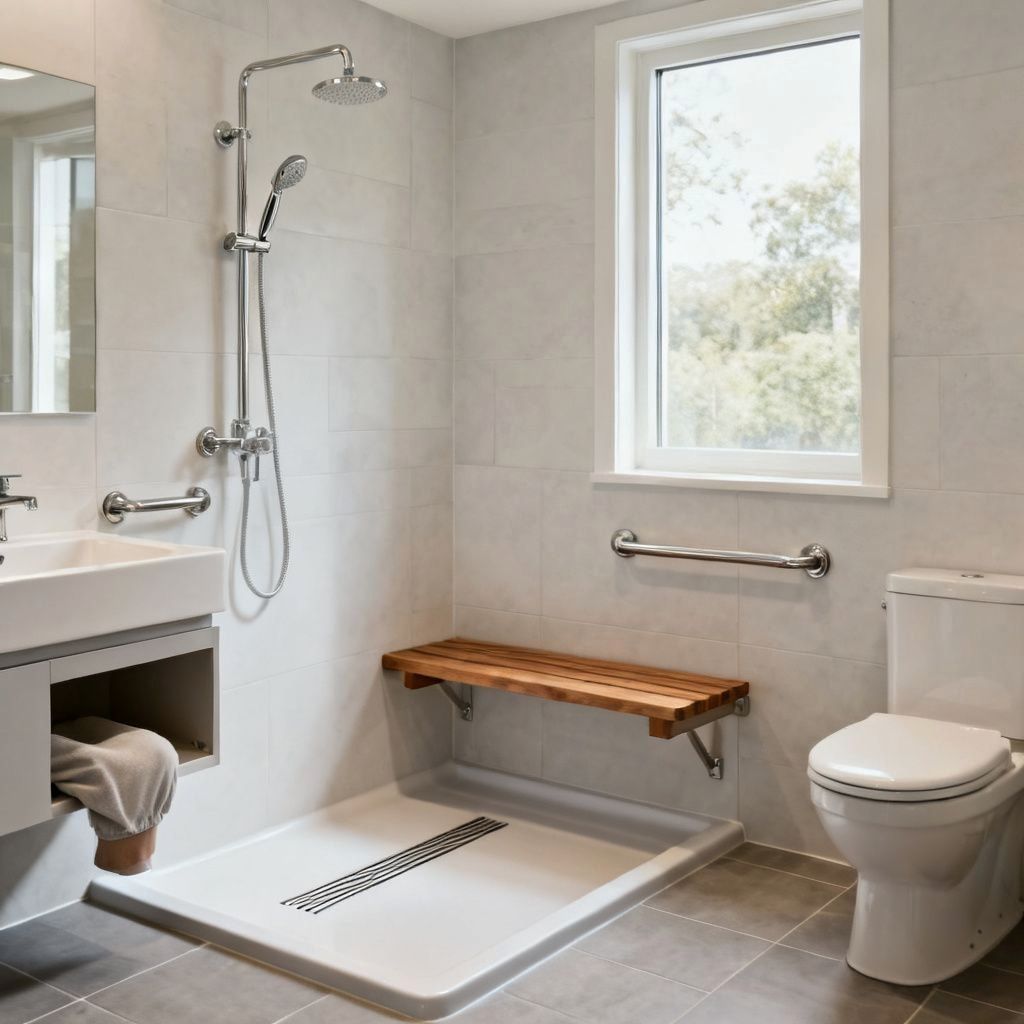
An accessible bathroom is designed so that everyone can use it safely and comfortably, now and as needs change. Done well, it does not look like a hospital. It looks like a calm, well-designed spa bathroom that happens to have no steps, plenty of support and everything within reach.
What defines the style
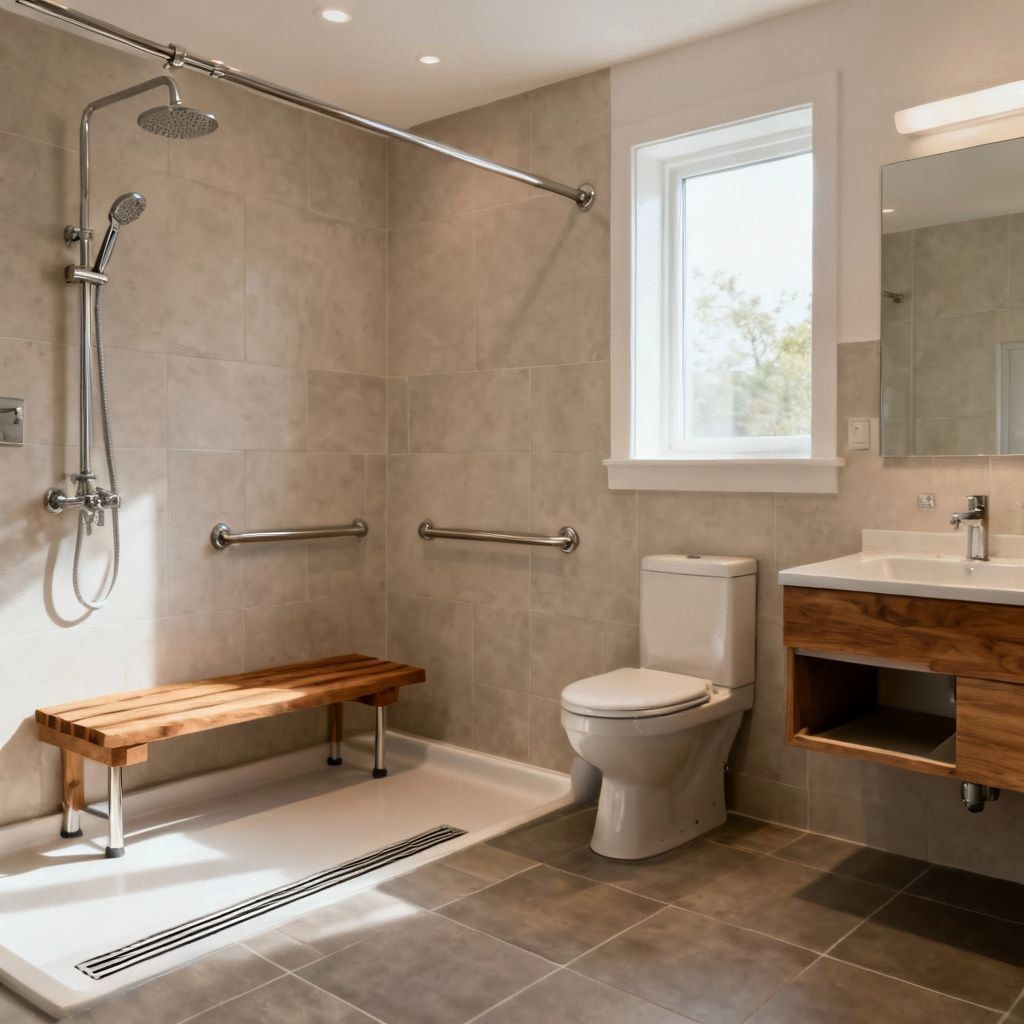
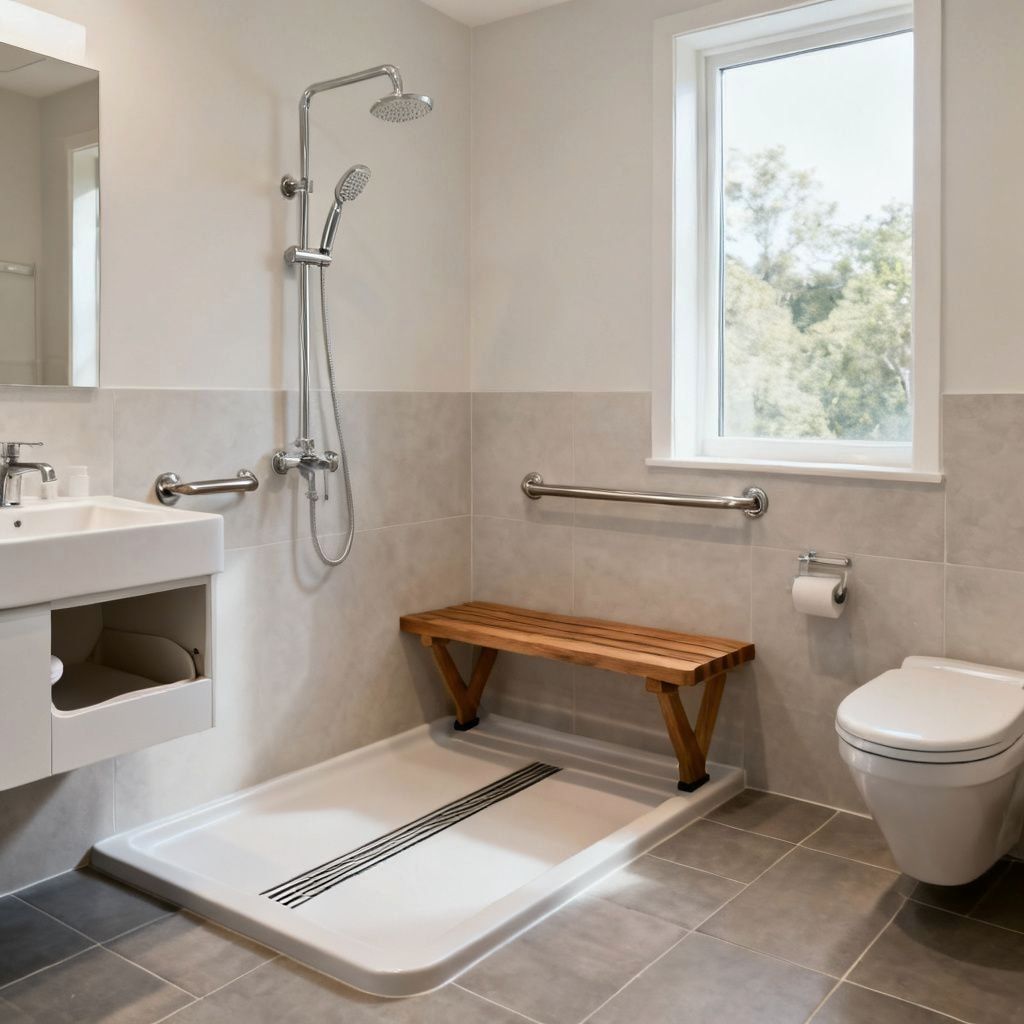
- No barriers. A curbless or very low-threshold shower, a linear drain and a floor that slopes gently to it.
- Support everywhere. Grab bars at the shower entry, inside the shower and beside the toilet, chosen to look like quality towel bars.
- A place to sit. A fold-down teak bench or a built-in tiled seat.
- Things at the right height. Comfort-height toilet, a vanity with knee space, lever handles and a handheld shower on a slide bar.
What it costs
Costs range more than any other style because accessibility can be added in stages. Grab bars, a handheld shower and lever faucets are inexpensive and can fit even a refresh budget. A curbless roll-in shower usually means recessing or re-sloping the floor, and widening a doorway means reframing, which pushes those projects into full remodel or premium budgets.
Where it fits in Champaign-Urbana
Any home where someone plans to stay long term, especially single-story ranches, which are already well suited to aging in place. It’s also a strong selling point: buyers of every age appreciate a bathroom with no step into the shower.
Things to watch
- Install wall blocking for grab bars during any remodel, even if you don’t add the bars yet. It costs very little now and saves tearing out tile later.
- Grab bars must be anchored into blocking or studs, never only into drywall or tile.
- Ask your contractor about experience with aging-in-place design. Clearances and heights matter.