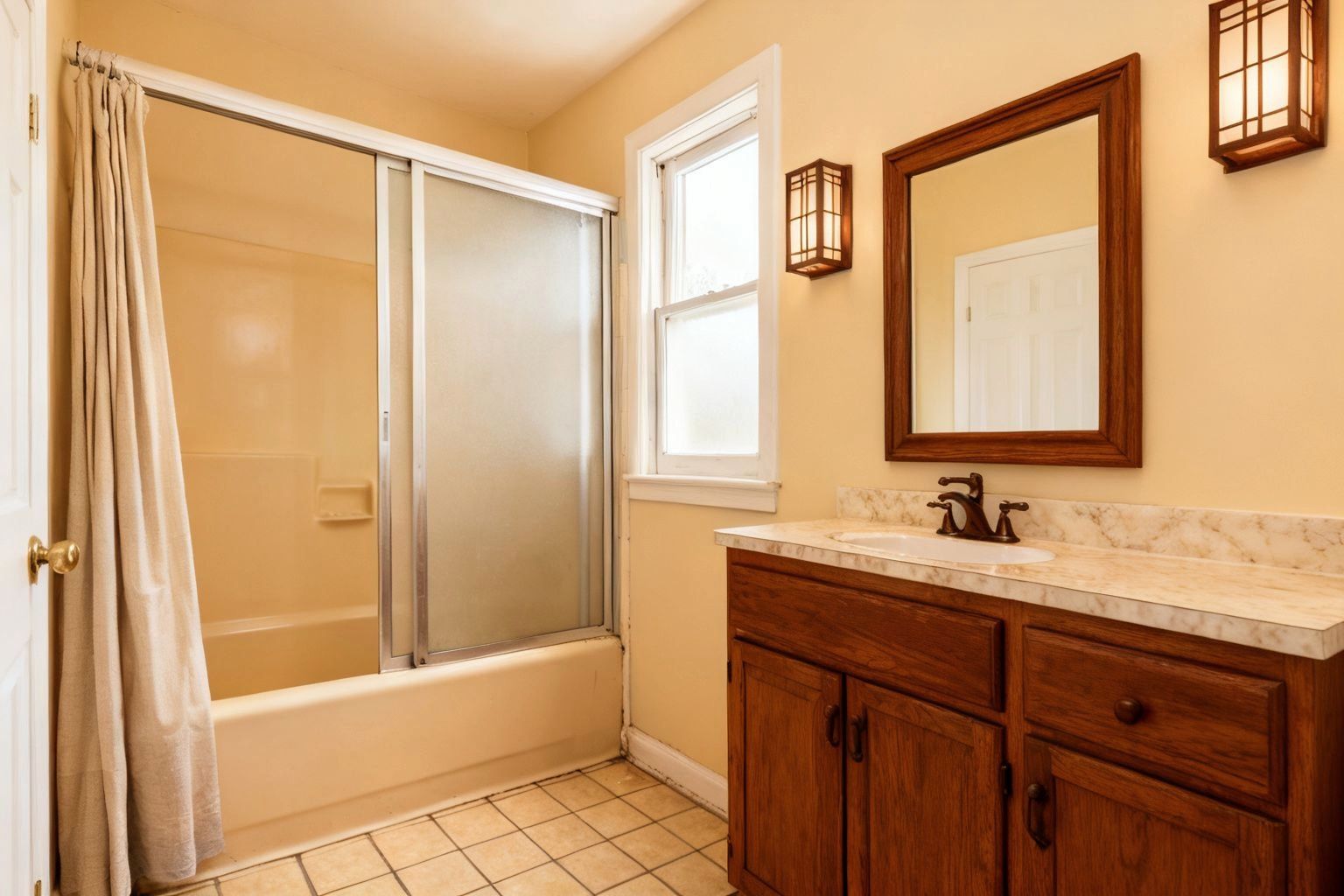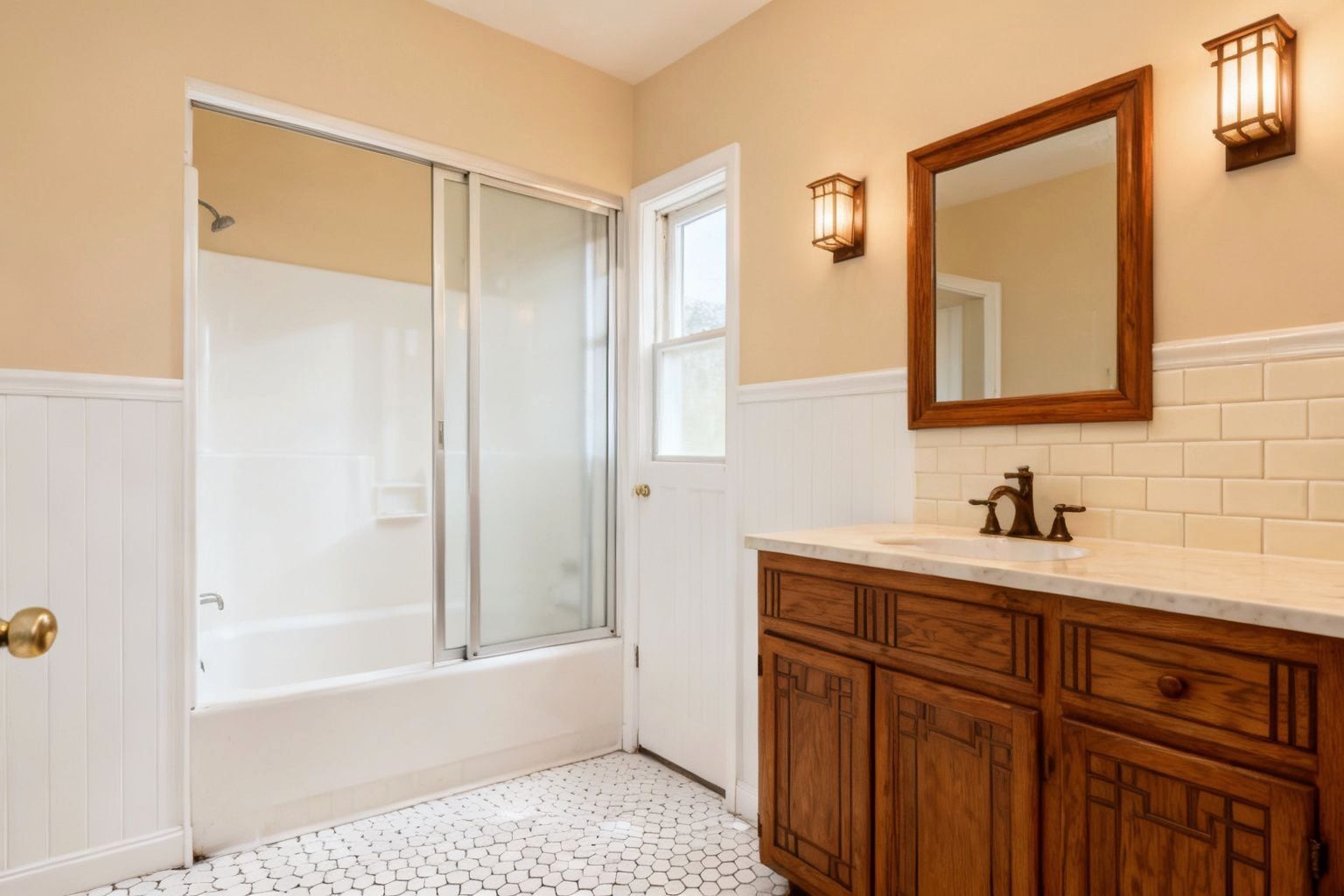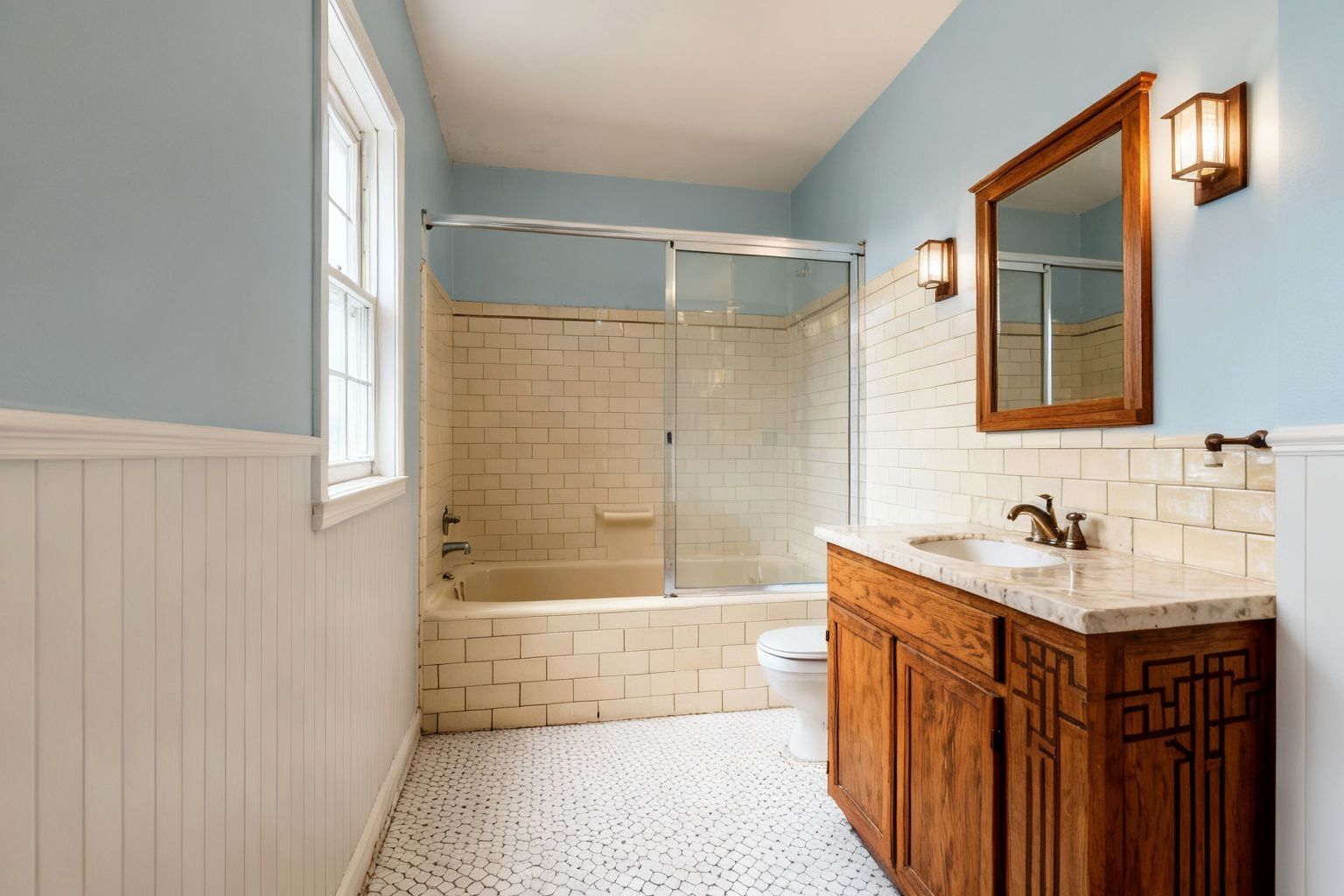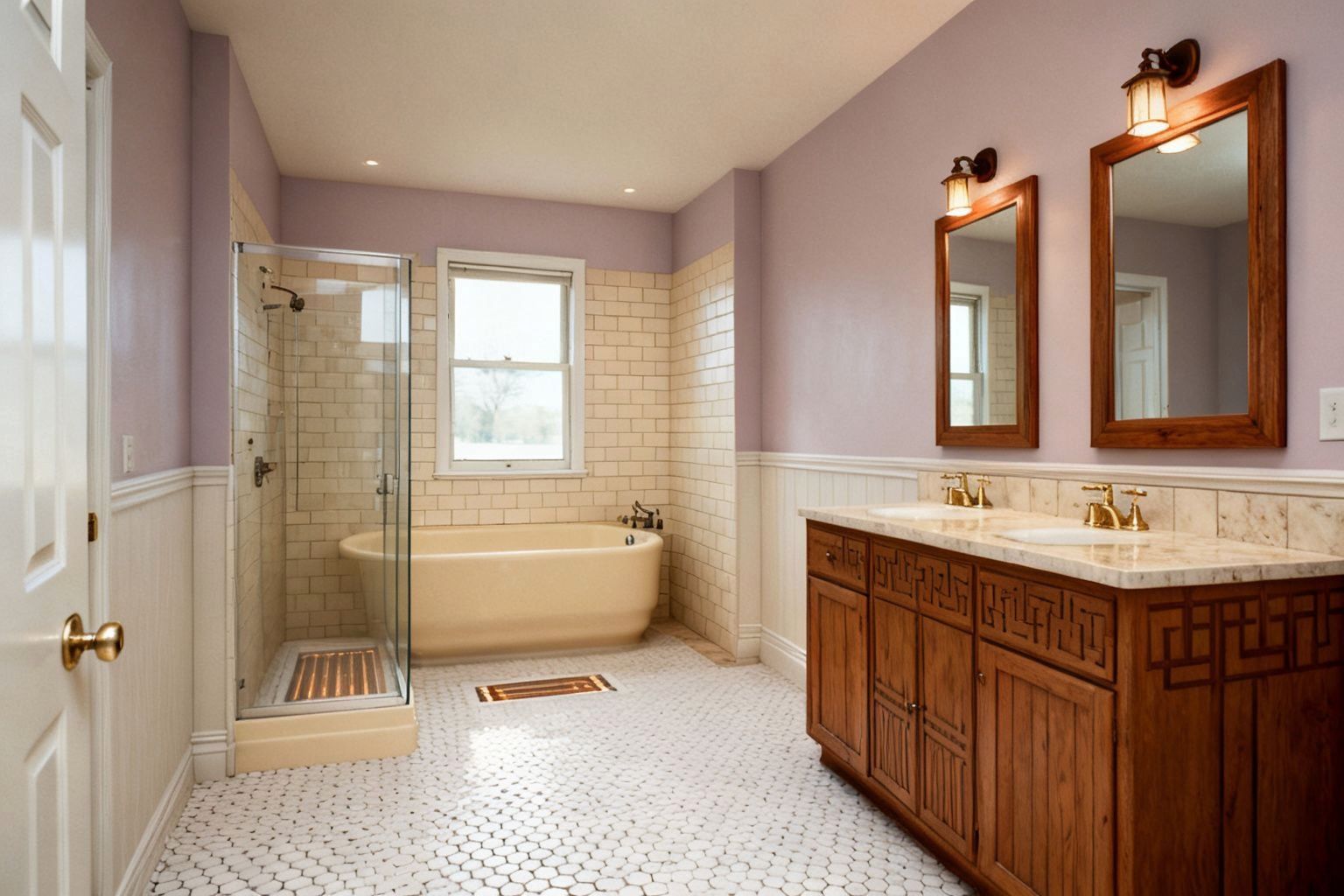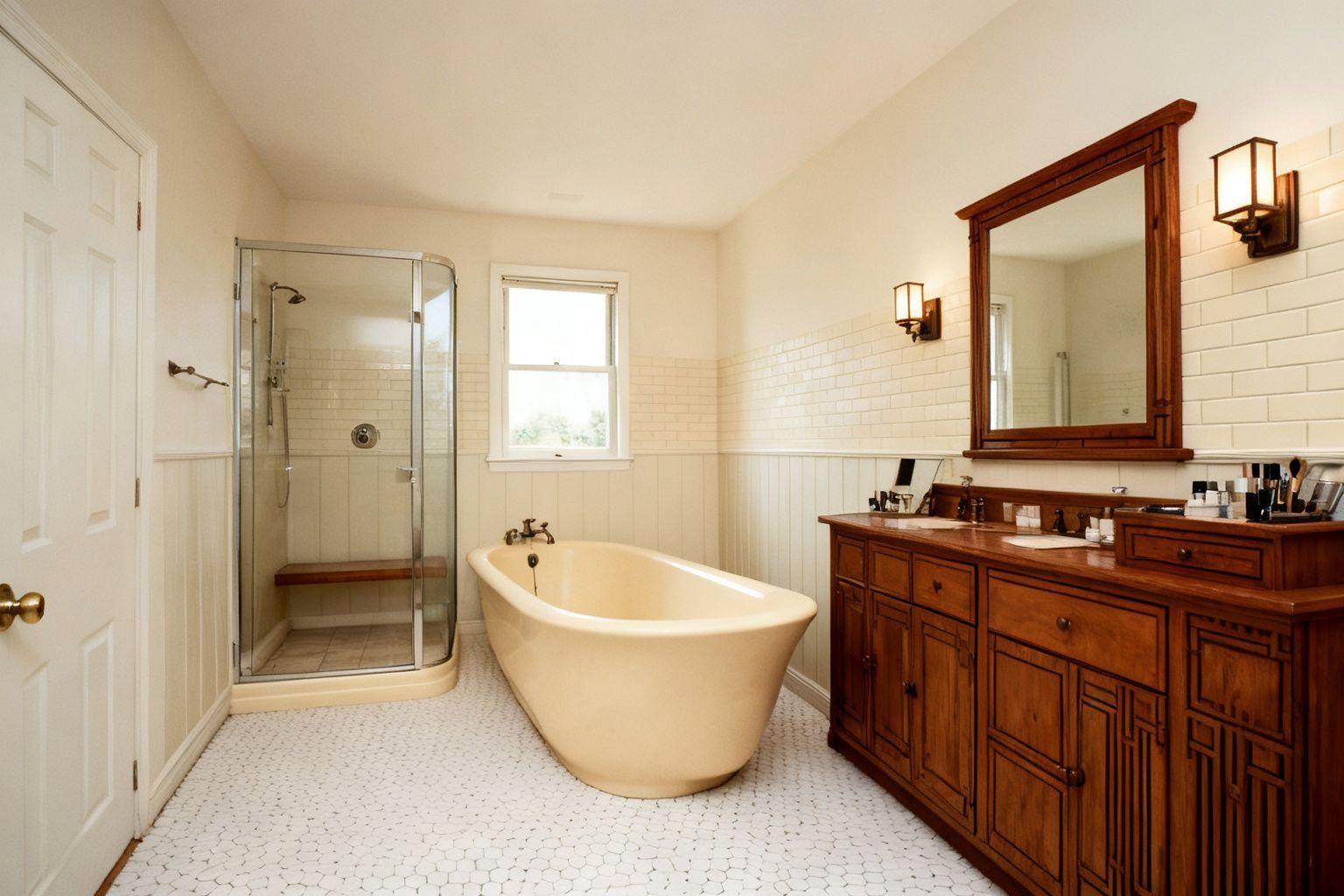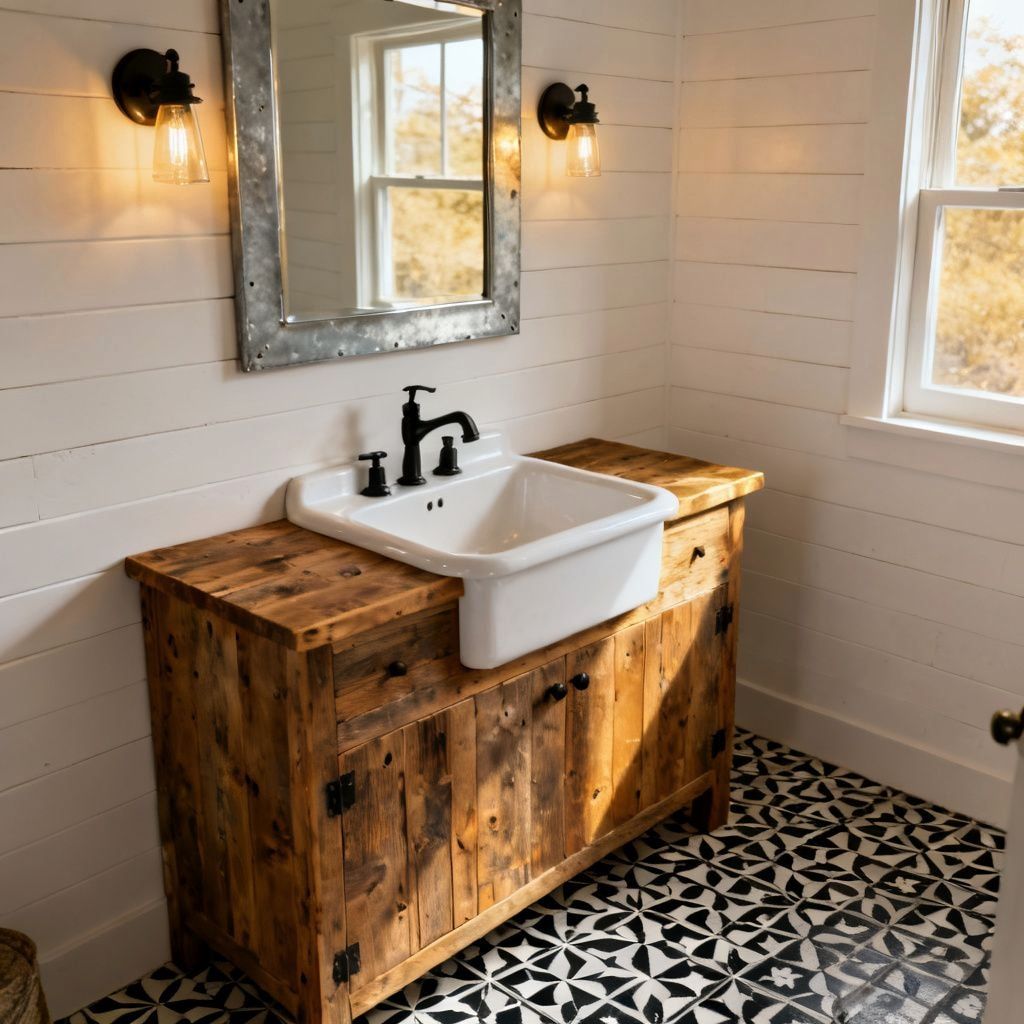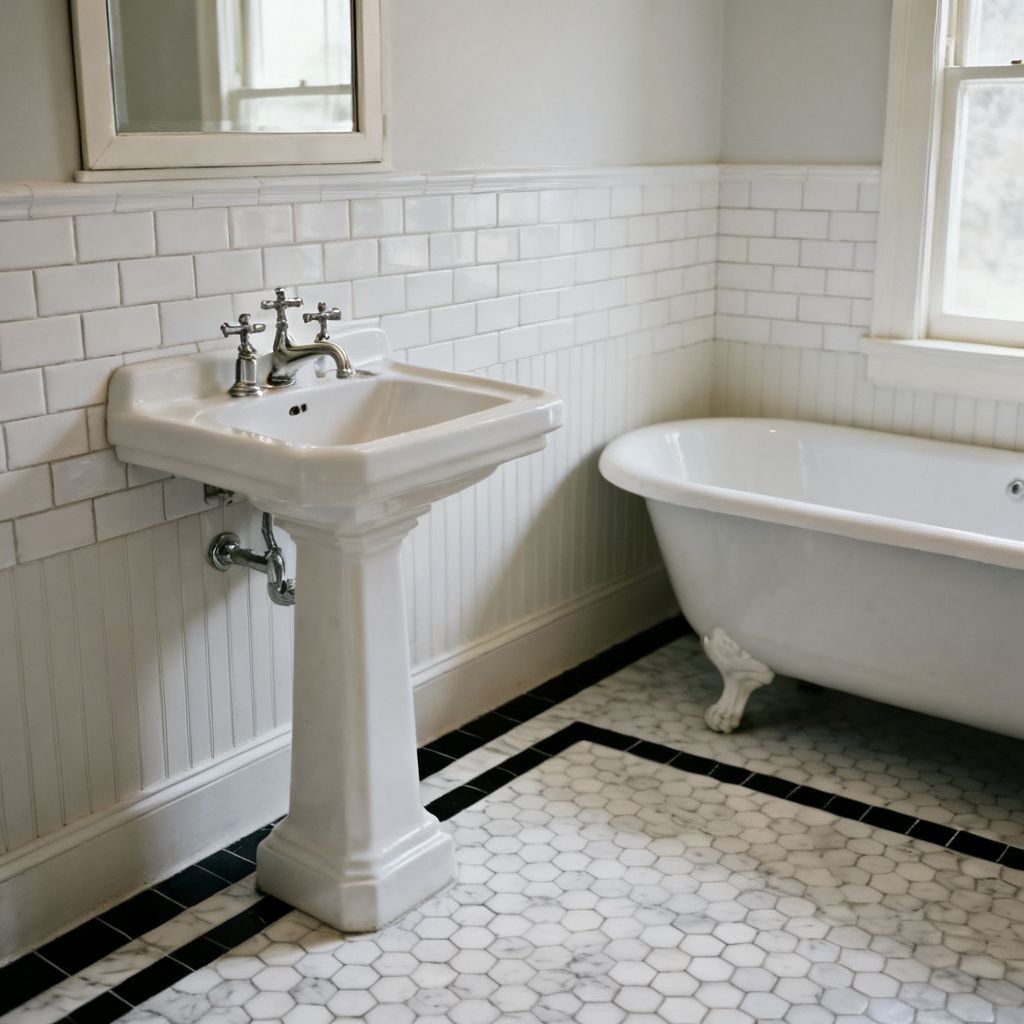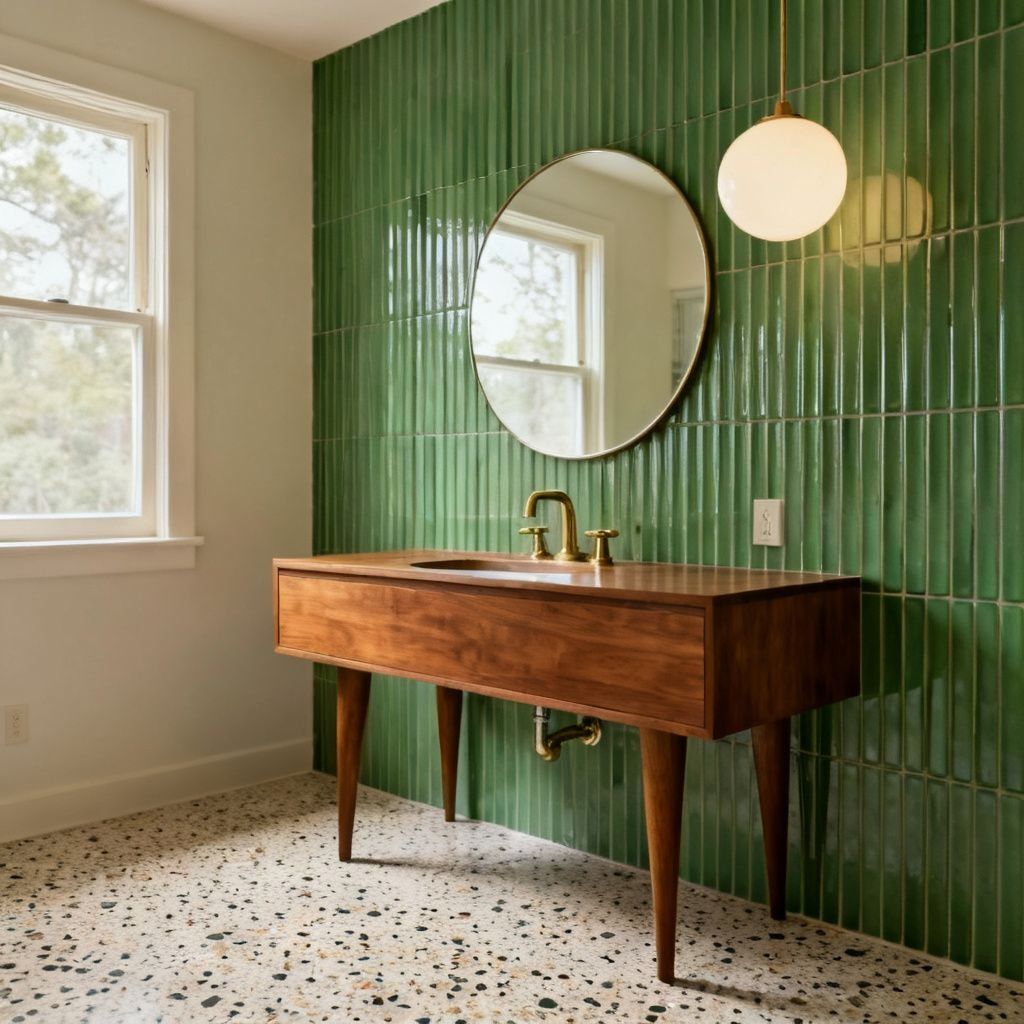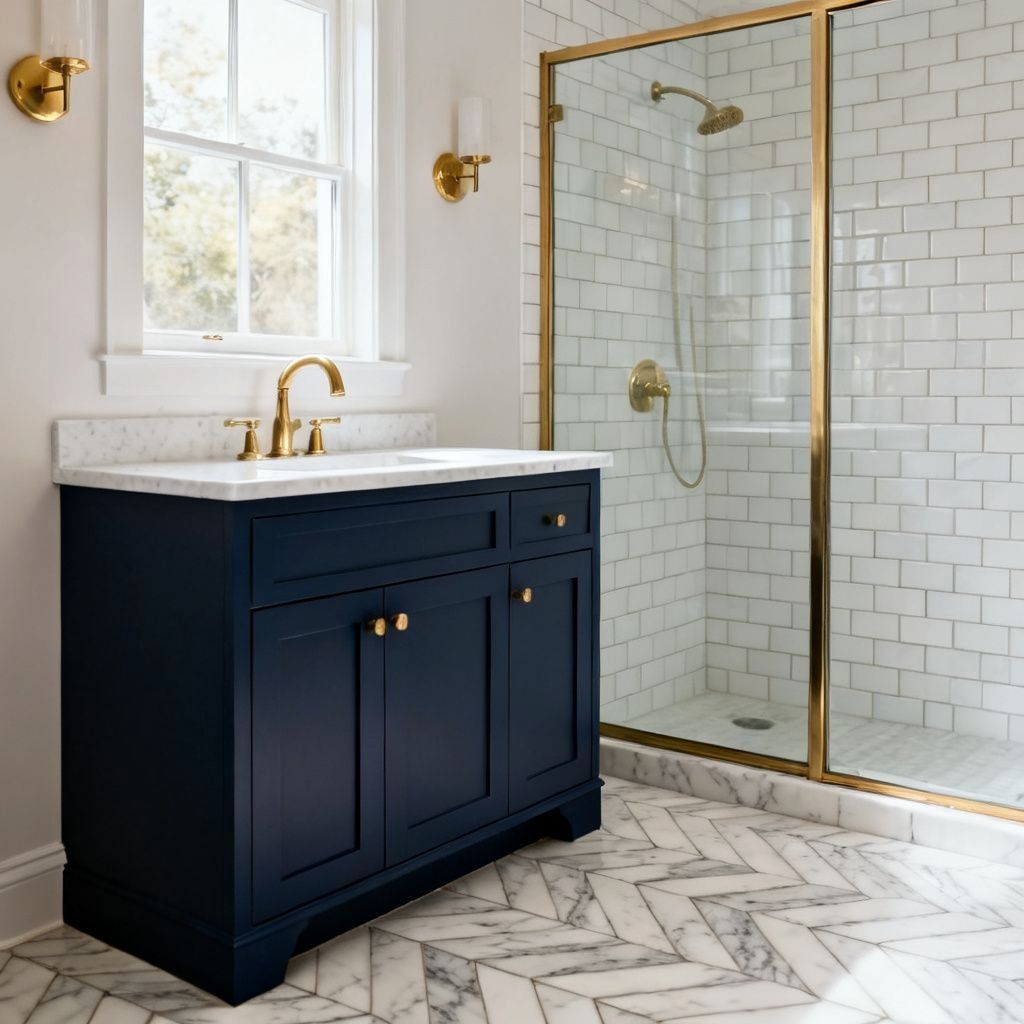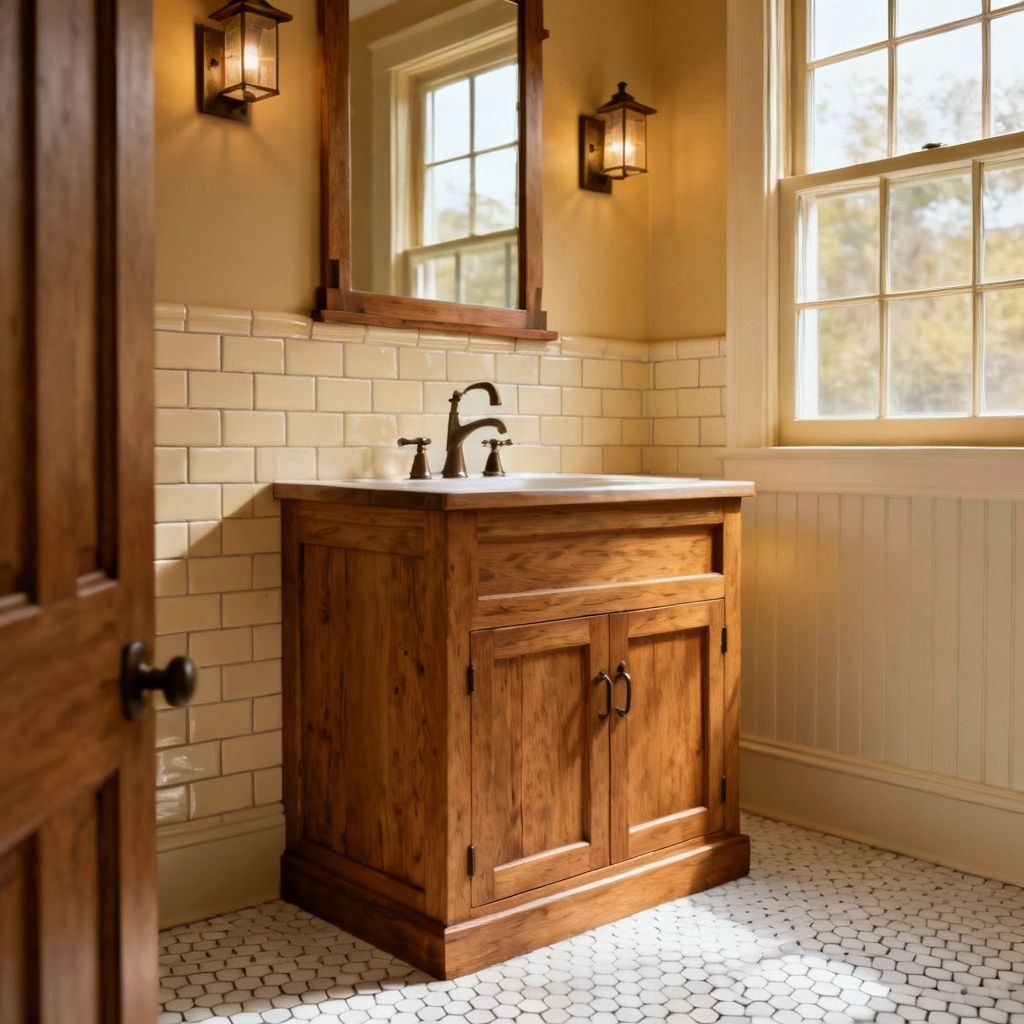
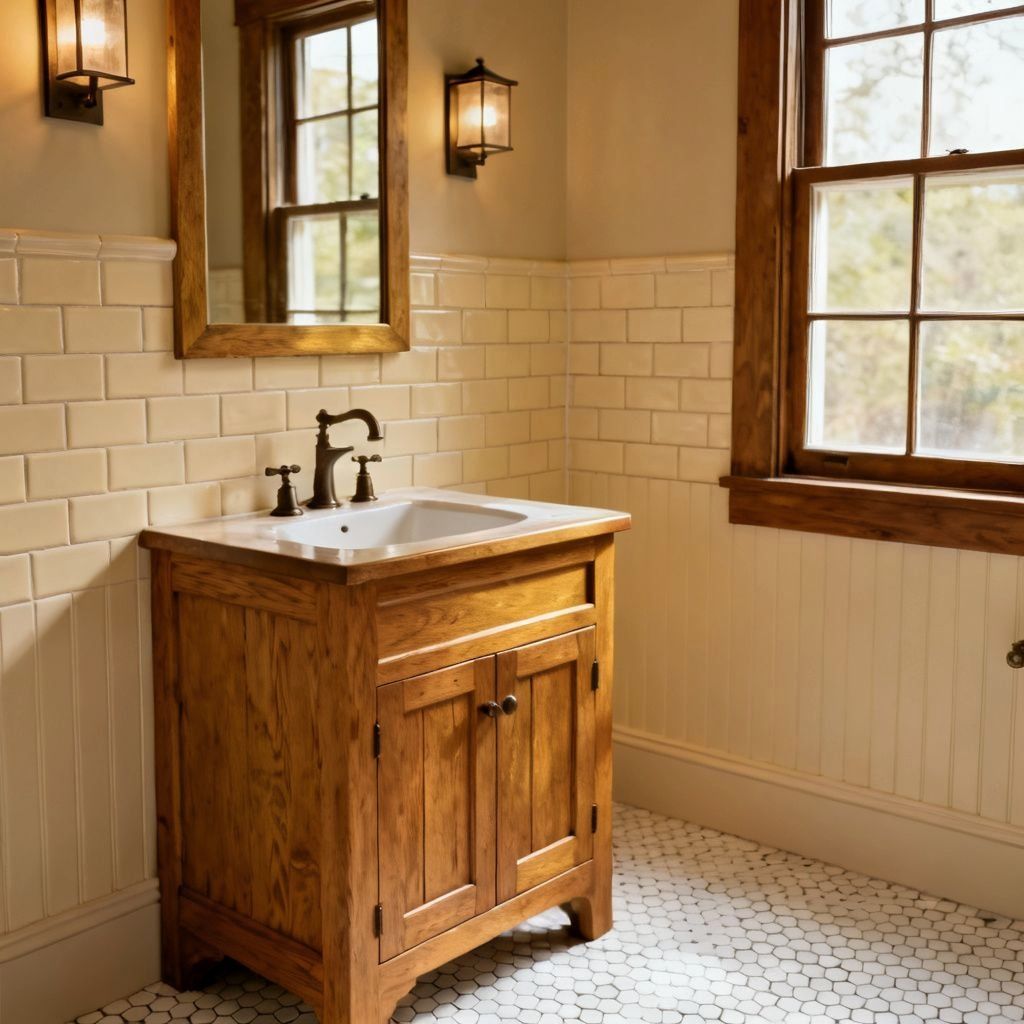
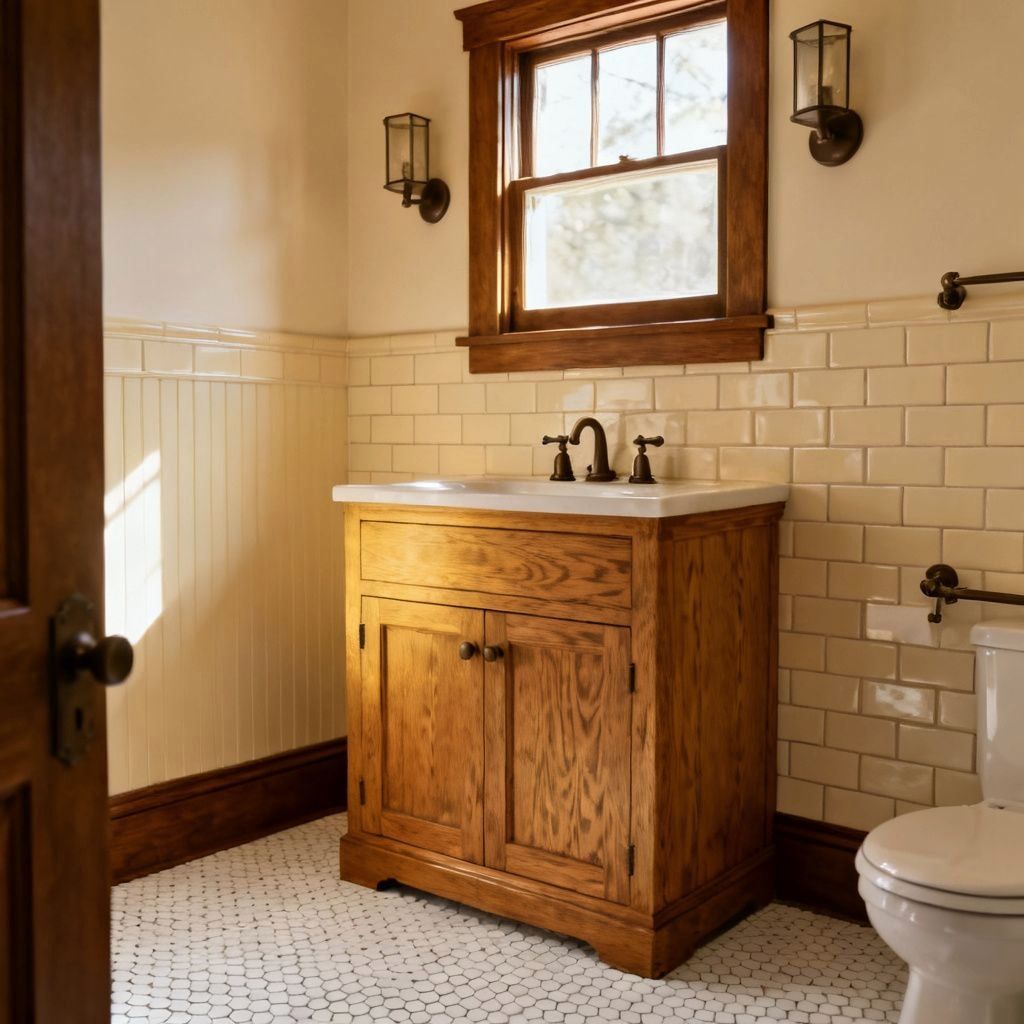
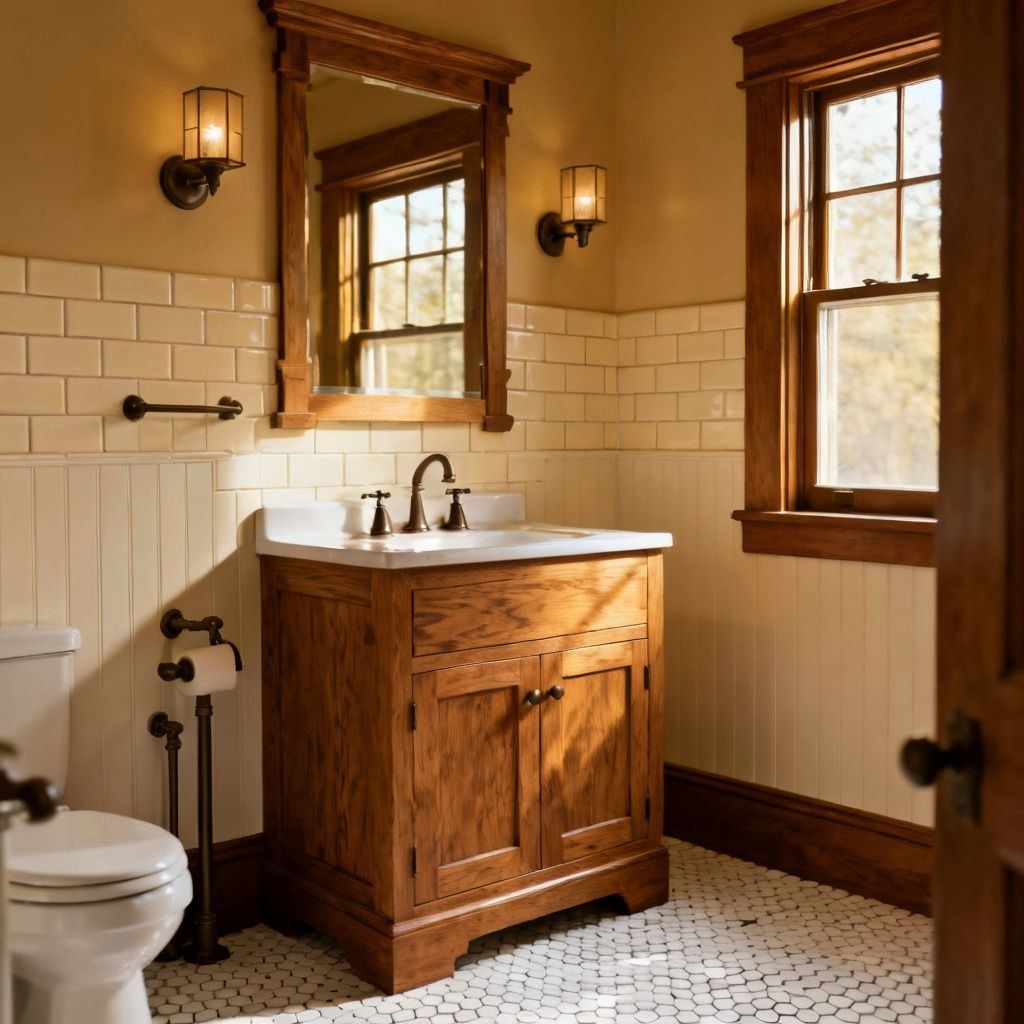
Champaign and Urbana have a large stock of Craftsman bungalows and foursquares from the 1910s through the 1930s. A Craftsman bathroom restores the honest, hand-made character those houses were built with: solid wood, simple lines, and tile with a little variation in the glaze.
What defines the style
- Solid wood with simple lines. Quarter-sawn oak is the classic, with flat panels and visible joinery rather than ornate trim.
- Handmade tile. Subway tile with a slightly irregular glaze, in cream, sage, soft blue or earthy green.
- Small-scale floors. Hex or square mosaic, often white with a simple border.
- Warm metal. Oil-rubbed bronze or aged brass instead of bright chrome.
What it costs
Craftsman lands in the middle to upper-middle of the range. The look depends on quality materials. Handmade tile and solid oak cost more than builder grade, and setting small mosaic floors and cap rails takes more labor hours. Machine-made tile with a handmade look is a good way to save.
Where it fits in Champaign-Urbana
This is the natural choice for bungalows and foursquares near downtown Champaign, West Urbana and the campus neighborhoods. A period-appropriate bathroom also tends to suit buyers shopping for older homes with original character.
Things to watch
- Bungalow bathrooms are often small, sometimes with a sloped ceiling or a dormer. Plan storage carefully.
- Old plaster walls and cast-iron drains are common. Budget for replacement while the walls are open.
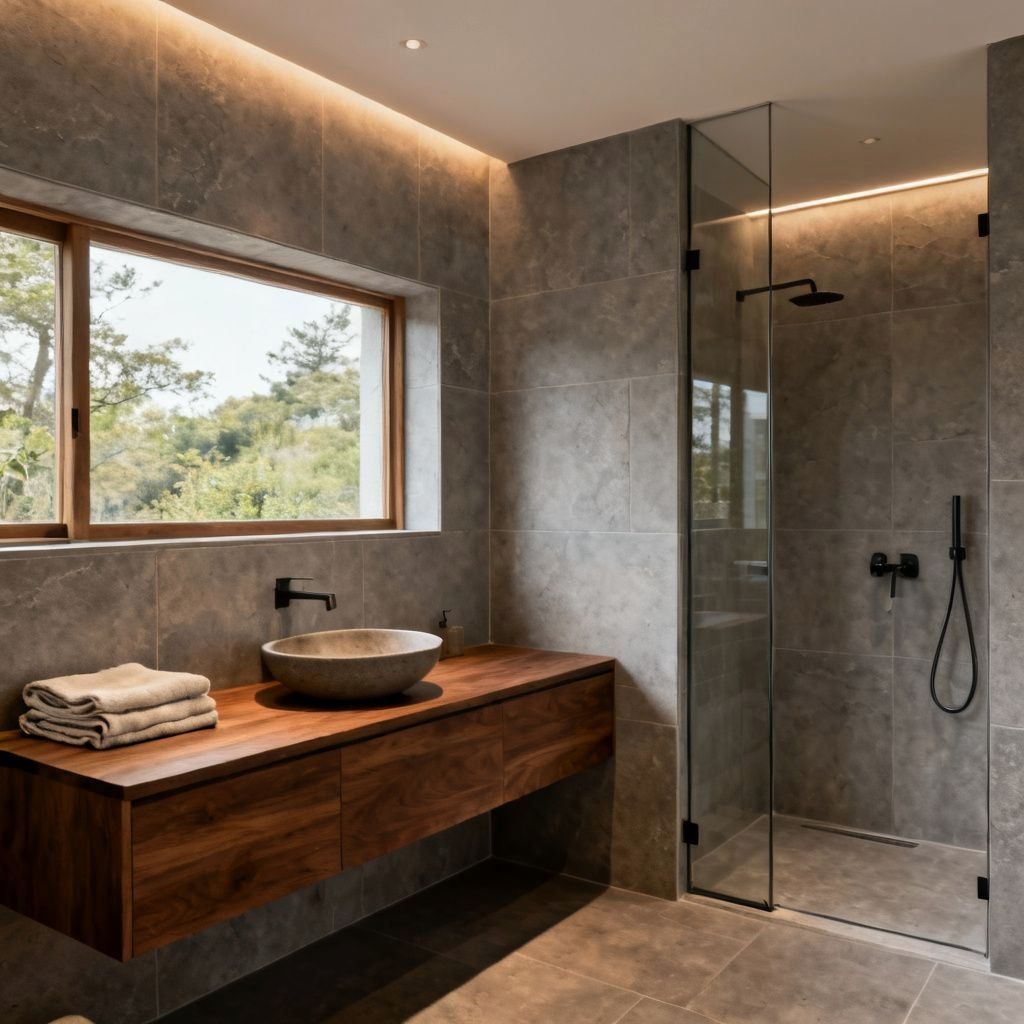
- Keep the scale small: big modern tiles and oversized vanities look out of place in a bungalow.