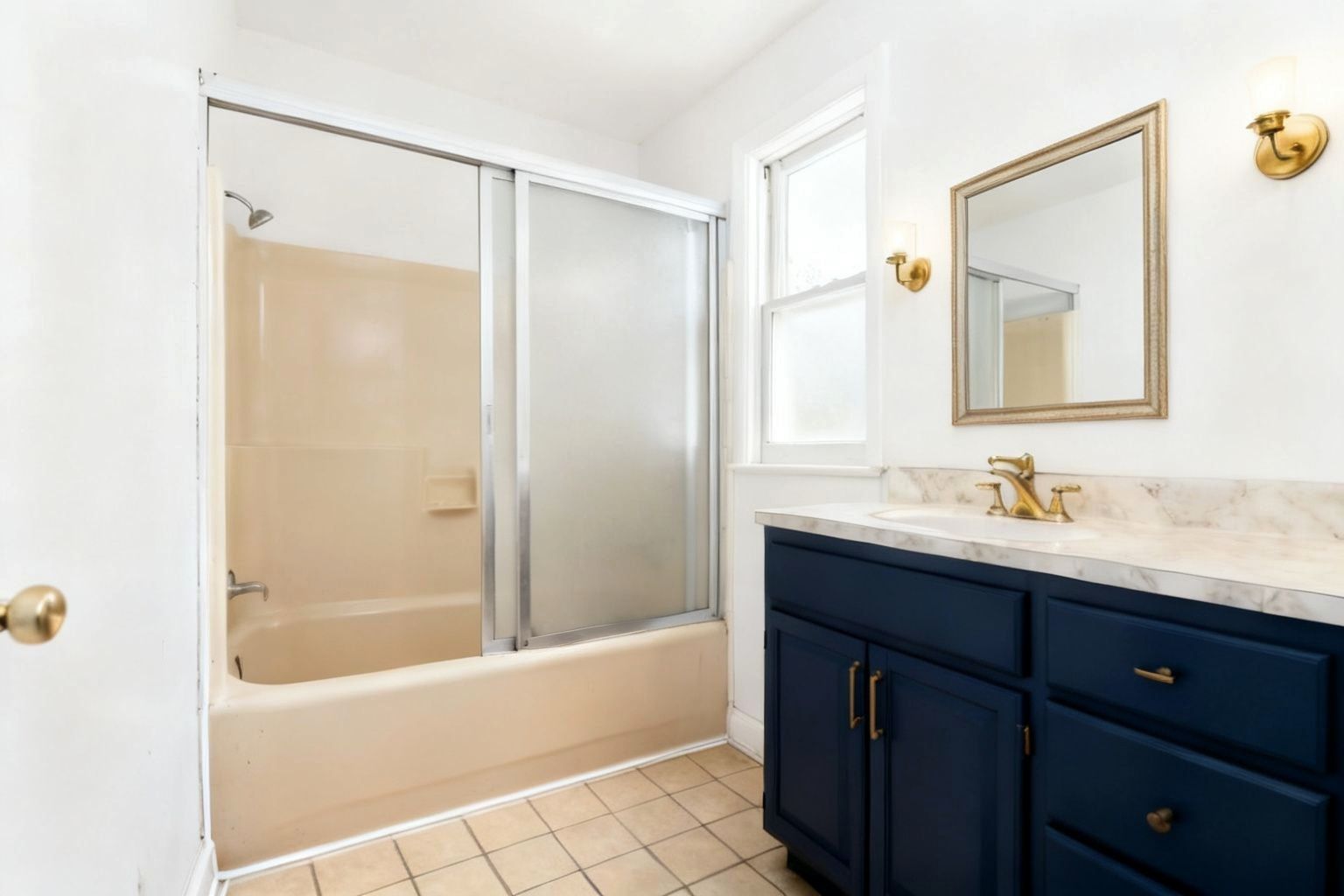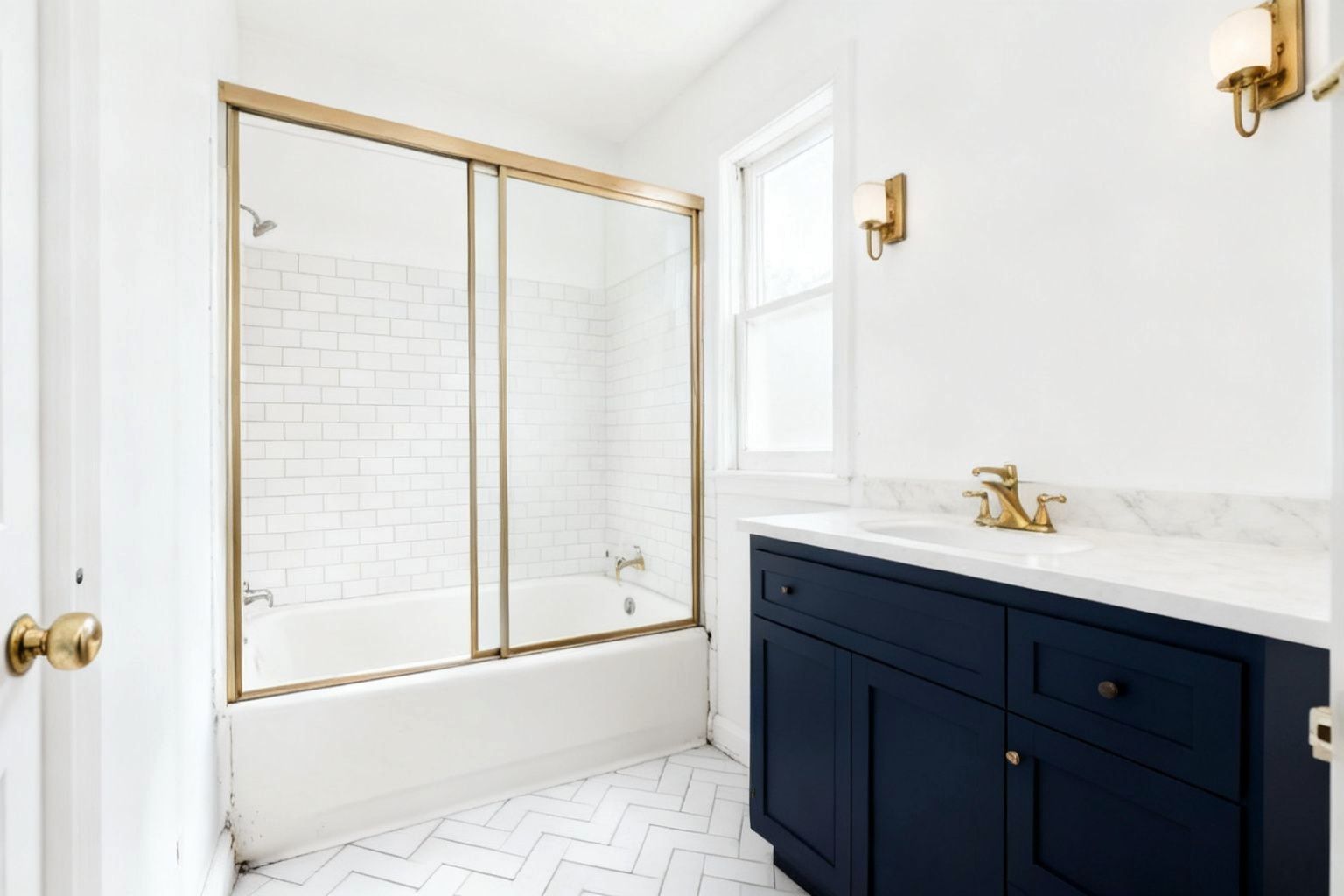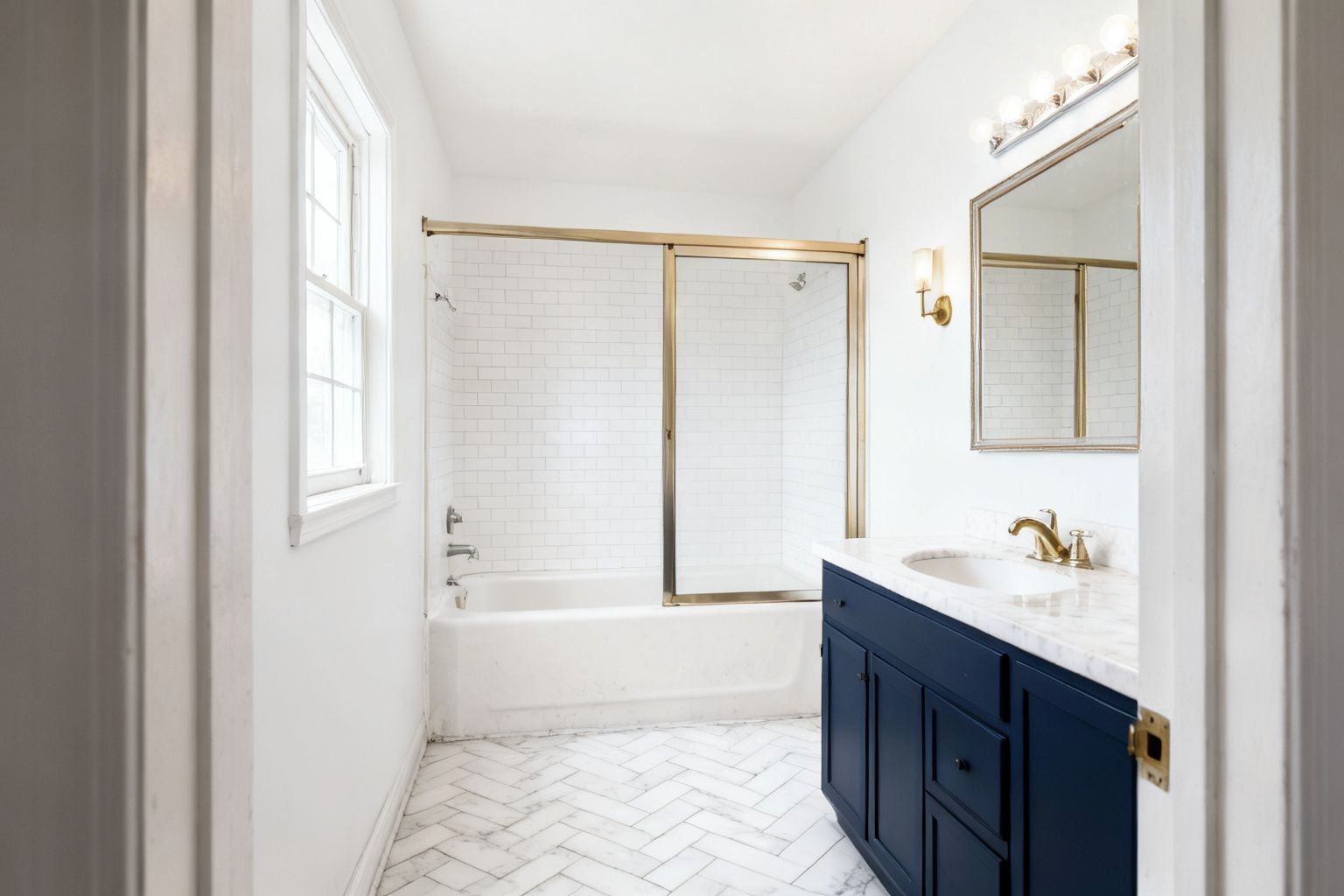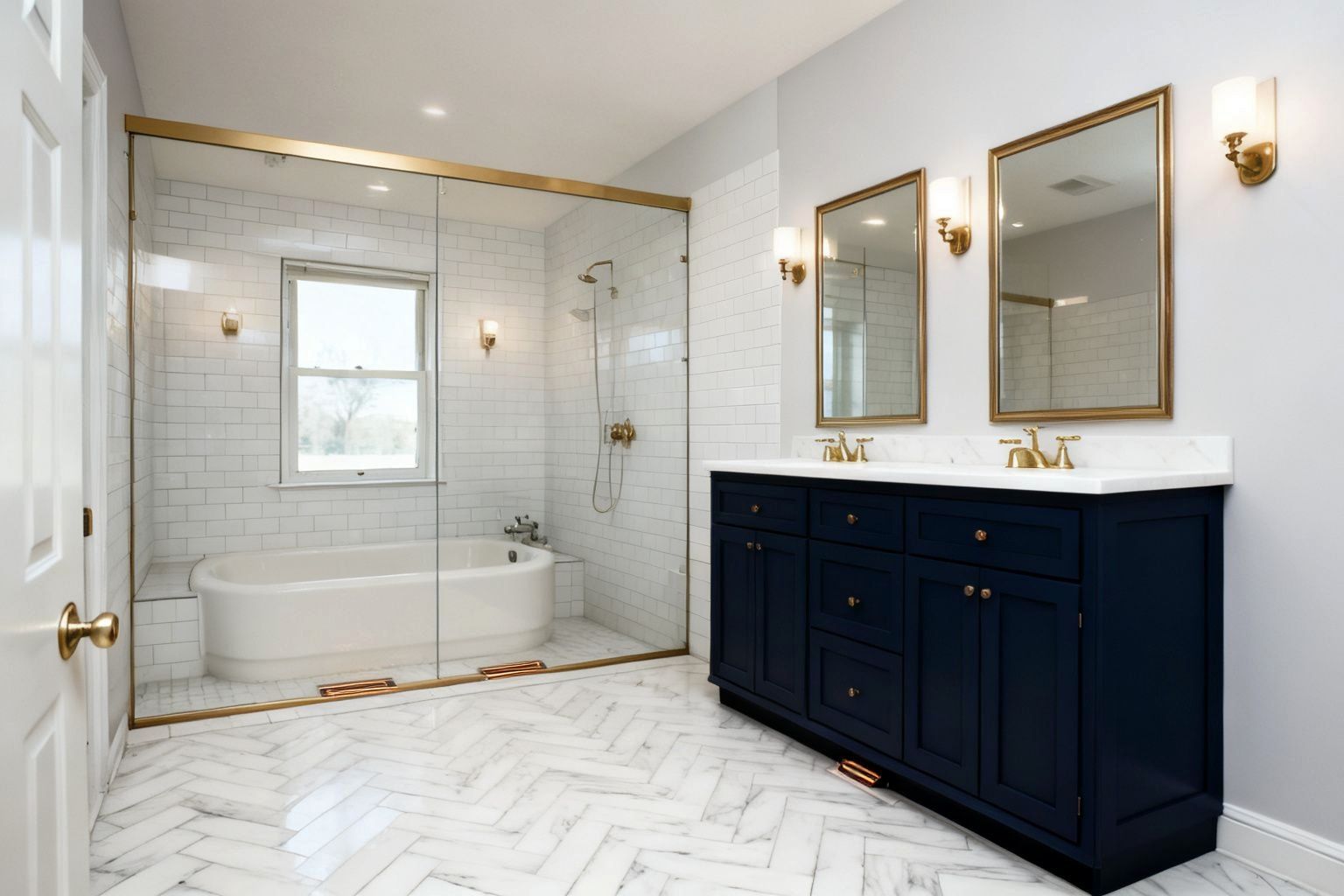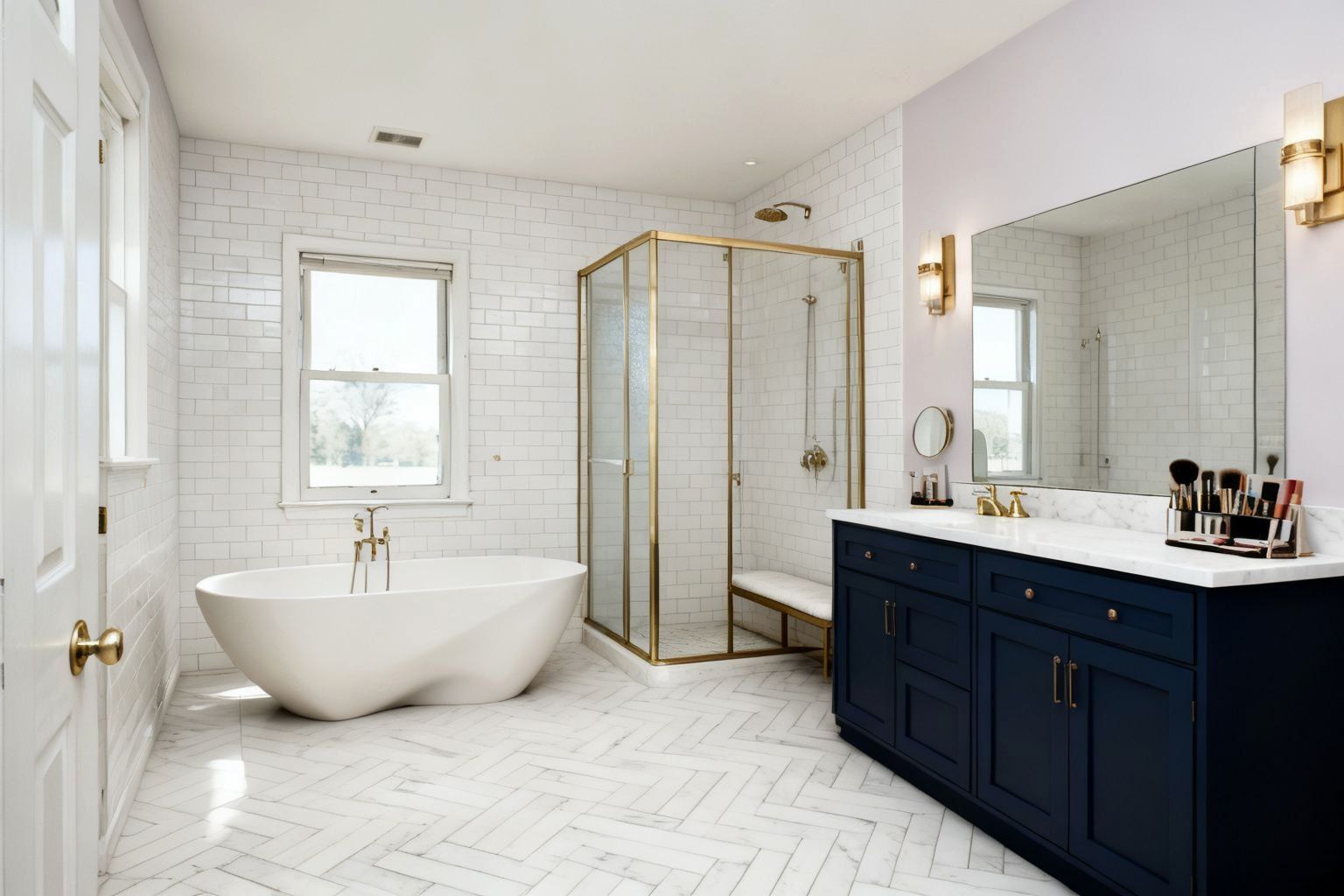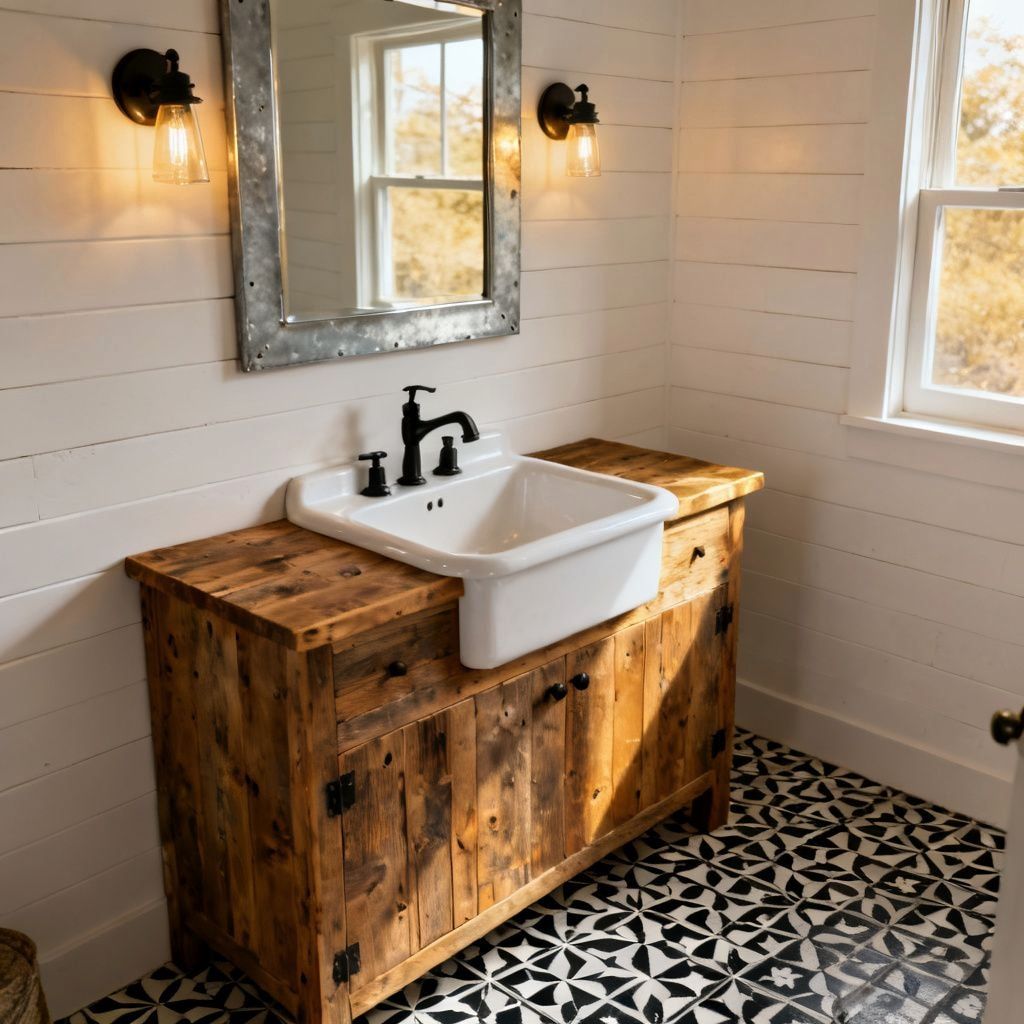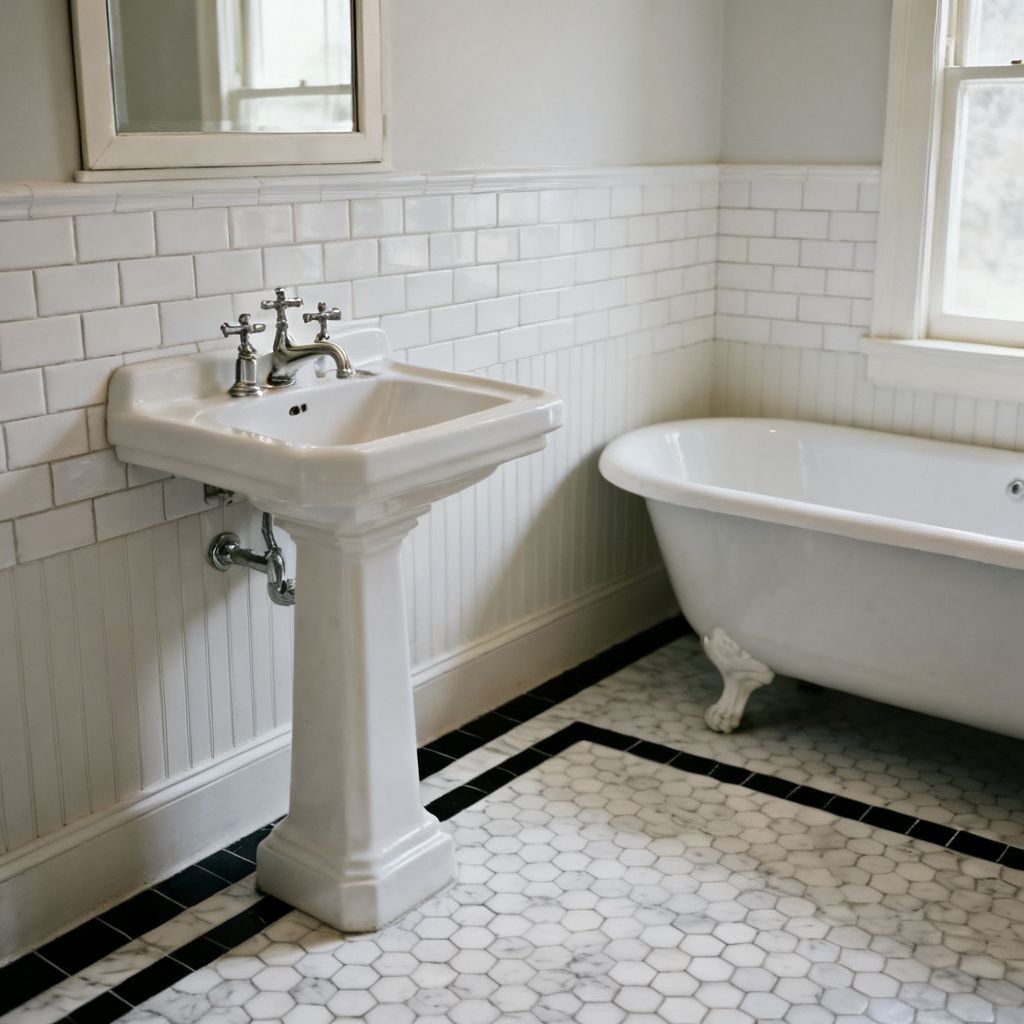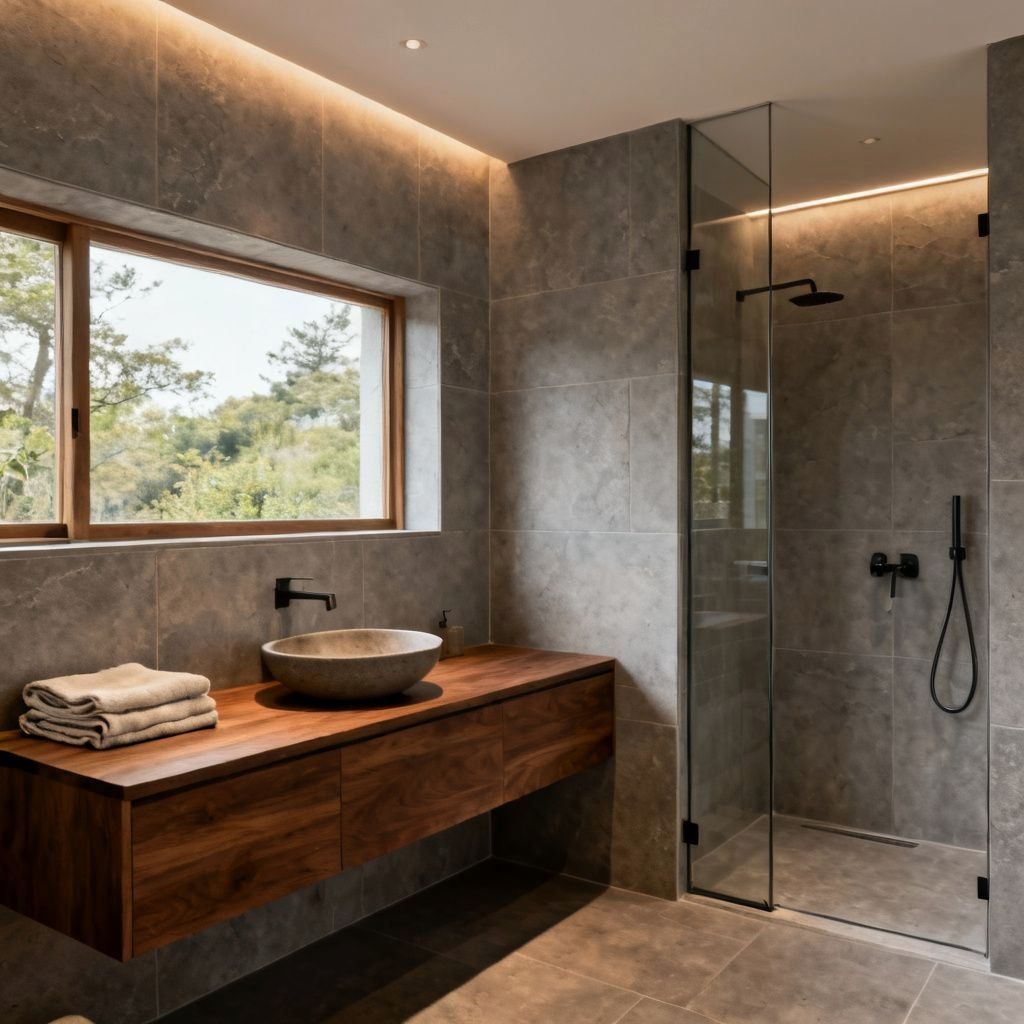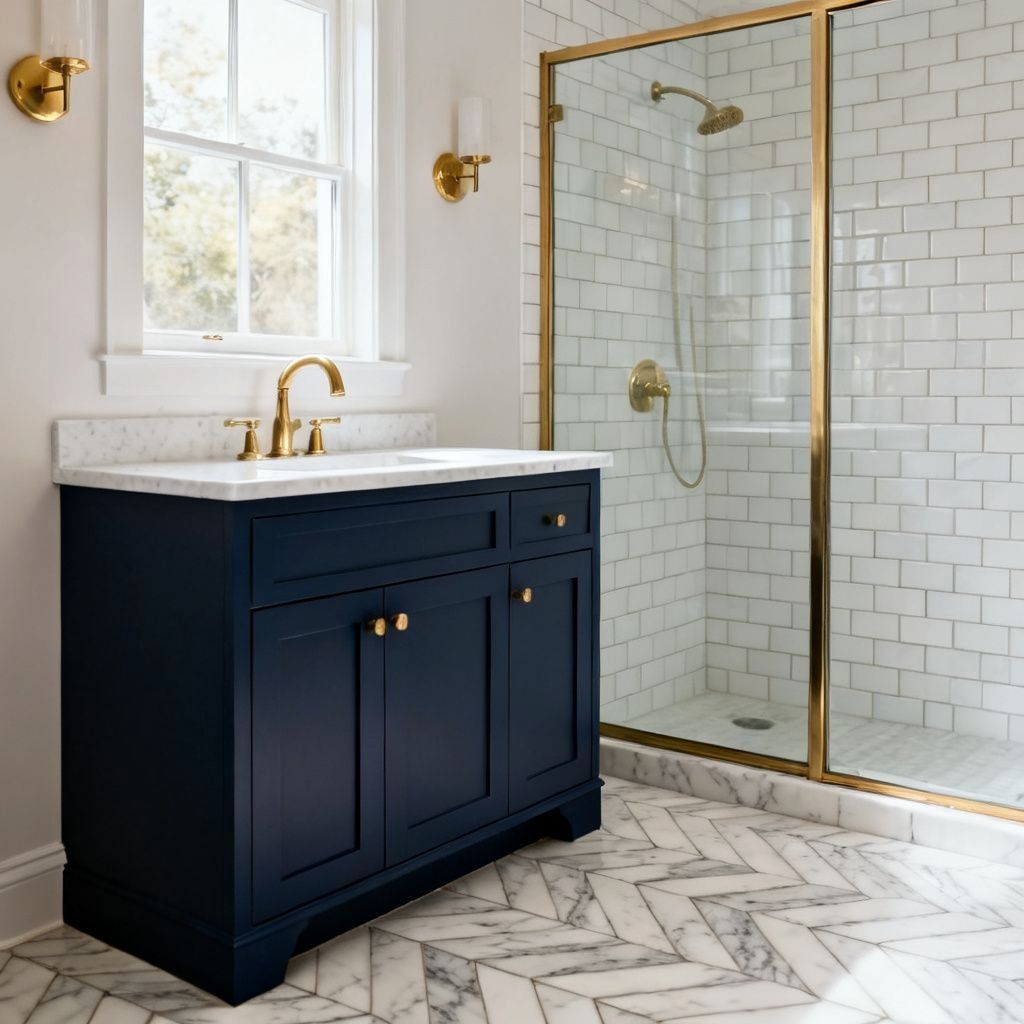
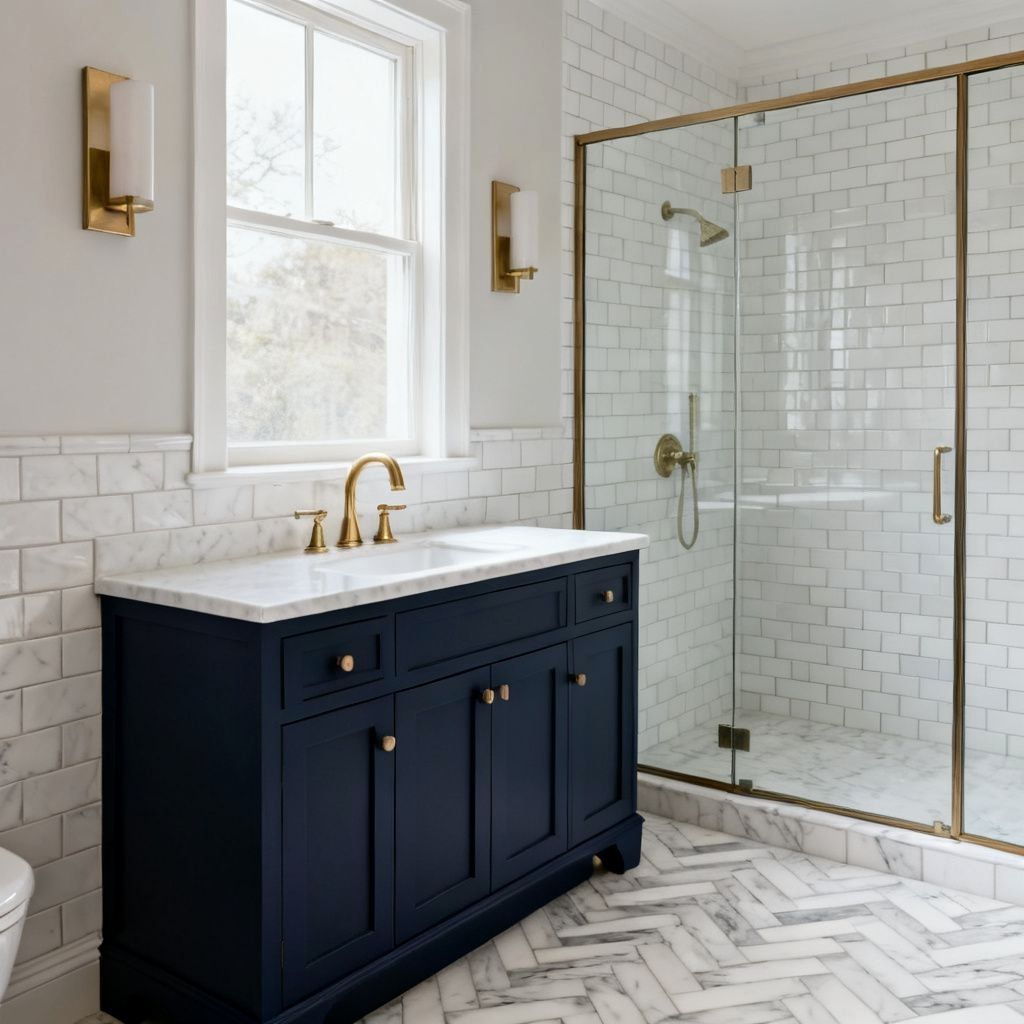
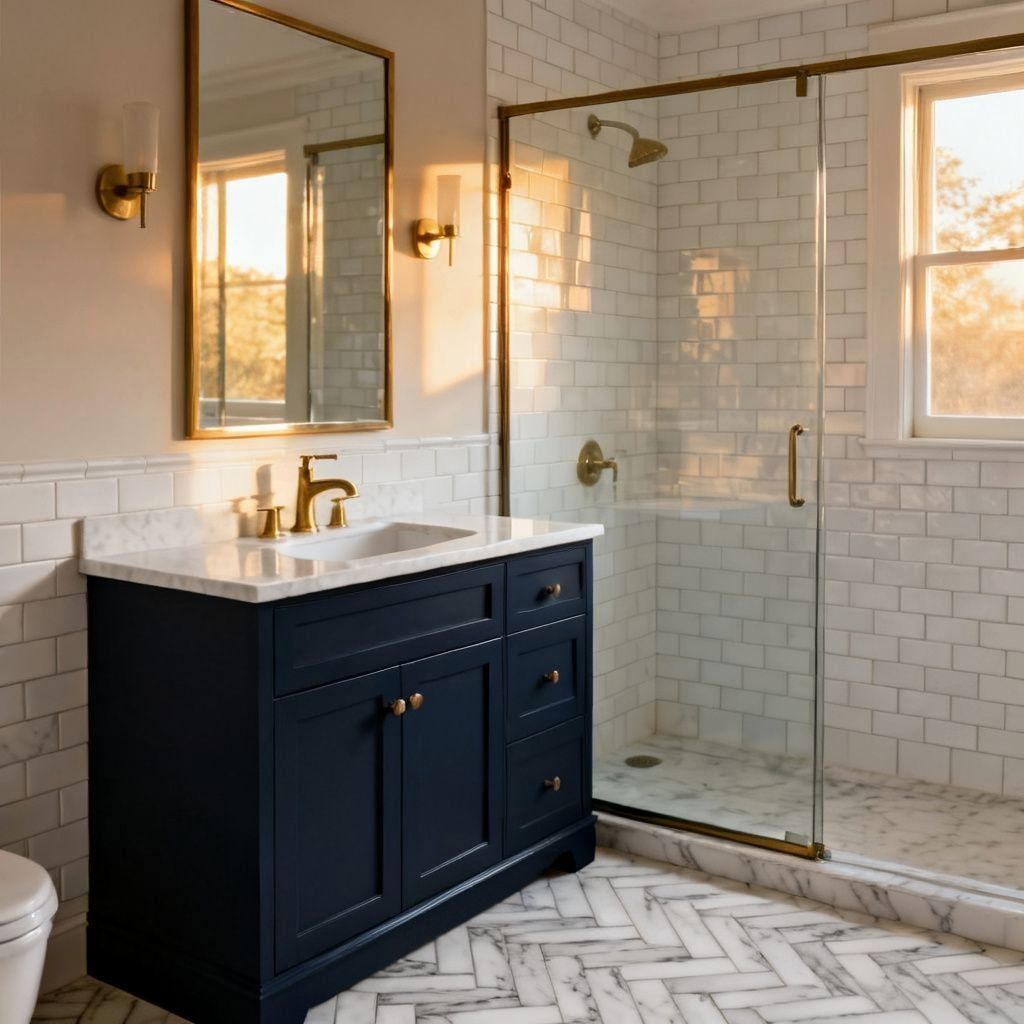
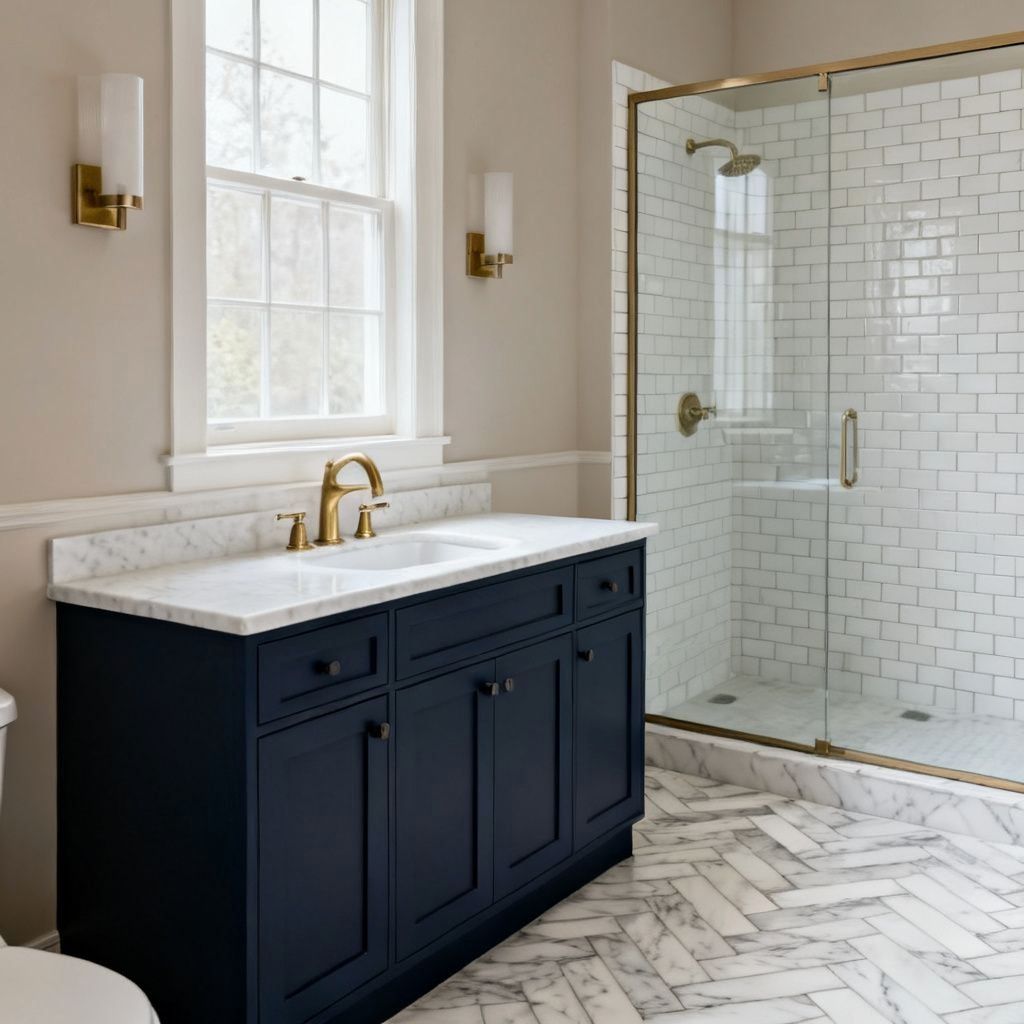
Transitional design sits between traditional and modern. It keeps familiar shapes like the shaker cabinet and subway tile, then adds a confident color and warm metal. It is the safest choice if you want something that feels current today and will not look dated in ten years.
What defines the style
- A painted shaker vanity in a deep color. Navy is the classic; forest green and charcoal are close behind.
- Brass. Brushed or unlacquered brass faucets, sconces and hardware warm up the cool colors.
- Patterned marble floors. Herringbone or chevron in white marble or a marble-look porcelain.
- A walk-in shower with white tile and a framed glass enclosure.
What it costs
Transitional bathrooms usually land in the middle of the range. Shaker vanities come in every price tier, from stock to fully custom. Herringbone floors take more cutting and layout time than a straight lay, so expect that labor on the estimate.
Where it fits in Champaign-Urbana
It suits almost every house in the area: older homes where full period restoration feels too formal, and newer homes that need more character than builder-grade white. It is also a strong choice before a sale, since it appeals to the widest range of buyers.
Things to watch
- Unlacquered brass darkens over time. Some people love the patina; if you do not, choose a lacquered or PVD brass finish.
- Dark painted vanities show scratches and water spots. Ask for a catalyzed or conversion varnish finish.
- Quartz is lower-maintenance than marble on a vanity top and looks nearly identical.